質
| ||||||||
Translingual
Han character
質 (Kangxi radical 154, 貝+8, 15 strokes, cangjie input 竹中月山金 (HLBUC), four-corner 72806, composition ⿱斦貝)
Derived characters
Related characters
References
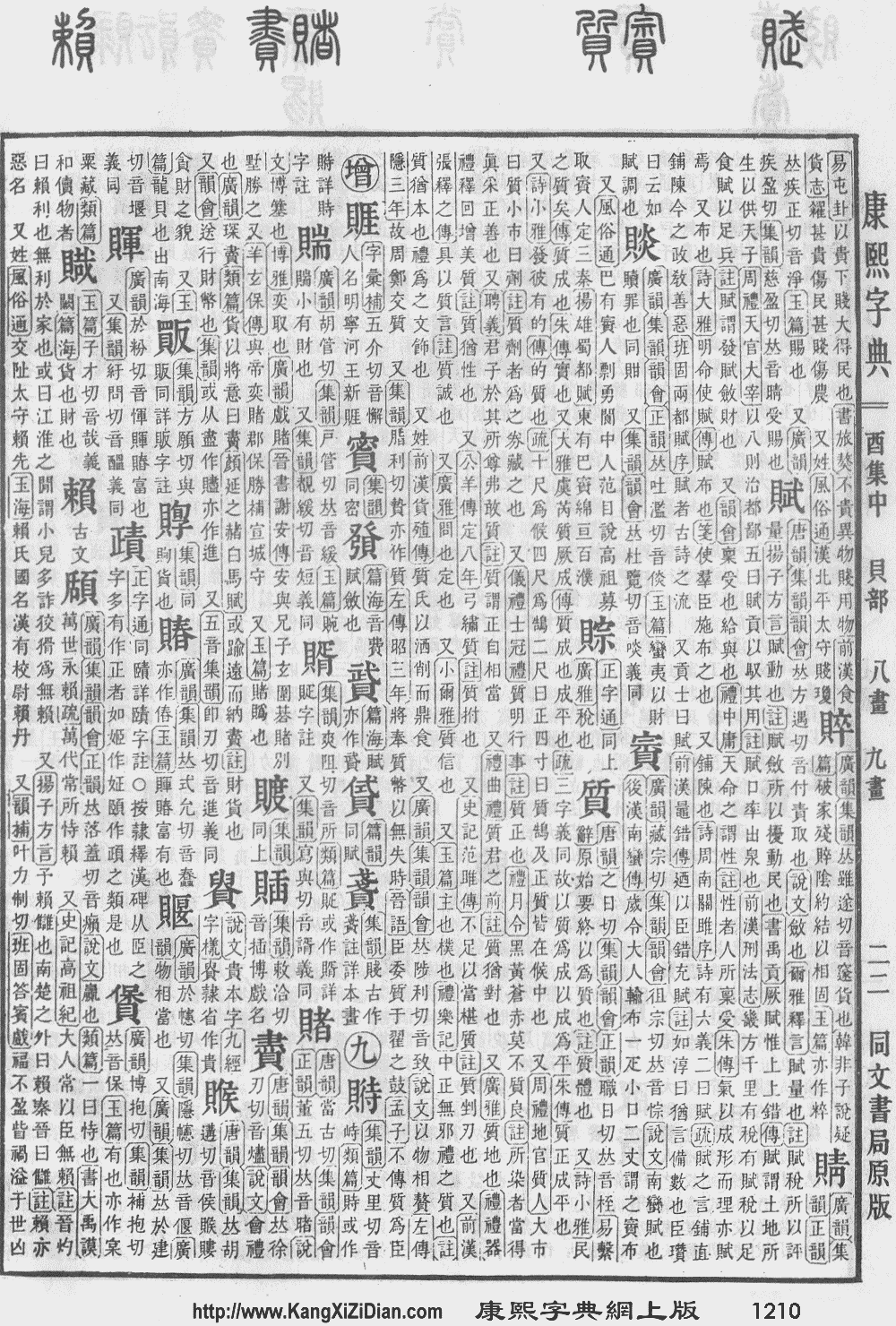
- Kangxi Dictionary: page 1210, character 7
- Dai Kanwa Jiten: character 36833
- Dae Jaweon: page 1676, character 5
- Hanyu Da Zidian (first edition): volume 6, page 3648, character 8
- Unihan data for U+8CEA
Chinese
Glyph origin
Characters in the same phonetic series (質) (Zhengzhang, 2003)
Ideogrammic compound (會意/会意) : 斦 + 貝. Zhu Junsheng also interpret this as a phono-semantic compound (形聲/形声) , where he regards 斦 as an original form of 櫍 (OC *tjid).
Pronunciation
Definitions
質
Synonyms
- (quality):
- (to query):
- (simple):
Compounds
- 中質原油/中质原油
- 互質/互质 (hùzhì)
- 介質/介质 (jièzhì)
- 介電質/介电质
- 優質/优质 (yōuzhì)
- 劣質/劣质 (lièzhì)
- 化學性質/化学性质 (huàxué xìngzhì)
- 區域變質/区域变质
- 原形質/原形质
- 原生質/原生质 (yuánshēngzhì)
- 原質/原质 (yuánzhì)
- 反物質/反物质 (fǎnwùzhì)
- 可孕物質/可孕物质
- 品質/品质 (pǐnzhì)
- 品質管制/品质管制
- 器質/器质 (qìzhì)
- 土質/土质 (tǔzhì)
- 土質液化/土质液化
- 地質/地质 (dìzhì)
- 地質學/地质学 (dìzhìxué)
- 地質活動/地质活动
- 大腦皮質/大脑皮质 (dànǎo pízhì)
- 大腦髓質/大脑髓质
- 天生麗質/天生丽质 (tiānshēnglìzhì)
- 姿質/姿质 (zīzhì)
- 媒質/媒质 (méizhì)
- 實質/实质 (shízhì)
- 實質利率/实质利率
- 實質所得/实质所得
- 實質違建/实质违建
- 對質/对质 (duìzhì)
- 引發物質/引发物质
- 形質/形质
- 彬彬文質/彬彬文质
- 待質/待质
- 性質/性质 (xìngzhì)
- 惡病質/恶病质 (èbìngzhì)
- 懷文抱質/怀文抱质
- 懷質抱真/怀质抱真
- 文化特質/文化特质
- 文質/文质
- 文質彬彬/文质彬彬 (wénzhìbīnbīn)
- 星際物質/星际物质
- 有機質/有机质 (yǒujīzhì)
- 木質/木质 (mùzhì)
- 木質莖/木质茎
- 木質部/木质部 (mùzhìbù)
- 本質/本质 (běnzhì)
- 材質/材质 (cáizhì)
- 樸質/朴质 (pǔzhì)
- 樸質無華/朴质无华
- 氣質/气质 (qìzhì)
- 水質/水质 (shuǐzhì)
- 流質/流质 (liúzhì)
- 海洋地質/海洋地质
- 溶質/溶质 (róngzhì)
- 濁質凡姿/浊质凡姿
- 灰質/灰质 (huīzhì)
- 牙質/牙质
- 牙釉質/牙釉质
- 物理性質/物理性质
- 物質/物质 (wùzhì)
- 物質三態/物质三态
- 物質建設/物质建设
- 物質文明/物质文明 (wùzhì wénmíng)
- 物質生活/物质生活 (wùzhì shēnghuó)
- 特質/特质 (tèzhì)
- 玉質金相/玉质金相
- 琺瑯質/珐琅质 (fàlángzhì)
- 瑋質/玮质
- 瓊林玉質/琼林玉质
- 生活品質/生活品质
- 異質/异质 (yìzhì)
- 當面對質/当面对质
- 白質/白质 (báizhì)
- 皮質/皮质 (pízhì)
- 皮質素/皮质素 (pízhìsù)
- 石灰質/石灰质
- 矽質岩/矽质岩
- 砂質/砂质
- 硬質合金/硬质合金
- 磷脂質/磷脂质
- 礦物質/矿物质 (kuàngwùzhì)
- 神經質/神经质 (shénjīngzhì)
- 純物質/纯物质
- 素質/素质 (sùzhì)
- 純質/纯质
- 細胞質/细胞质 (xìbāozhì)
- 絲質/丝质 (sīzhì)
- 纖纖弱質/纤纤弱质
- 羊質虎皮/羊质虎皮
- 美質/美质
- 考古質疑/考古质疑
- 腐植質/腐植质
- 腐殖質/腐殖质 (fǔzhízhì)
- 良質/良质
- 良質米/良质米
- 良質美手/良质美手
- 色質細胞/色质细胞
- 茶質/茶质
- 草質莖/草质茎 (cǎozhìjīng)
- 菌質/菌质
- 蕙心紈質/蕙心纨质
- 蕙心蘭質/蕙心兰质
- 蕙質/蕙质
- 蕙質蘭心/蕙质兰心
- 蘭蕙質/兰蕙质
- 虎皮羊質/虎皮羊质
- 蛋白質/蛋白质 (dànbáizhì)
- 角質層/角质层 (jiǎozhìcéng)
- 變質/变质 (biànzhì)
- 象牙質/象牙质 (xiàngyázhì)
- 資質/资质 (zīzhì)
- 質問/质问 (zhìwèn)
- 質因數/质因数 (zhìyīnshù)
- 質地/质地 (zhìdì)
- 質子/质子 (zhìzǐ)
- 質實/质实
- 質對/质对 (zhìduì)
- 質感/质感
- 質成/质成
- 質數/质数 (zhìshù)
- 質料/质料 (zhìliào)
- 質明/质明
- 質朴/质朴 (zhìpǔ)
- 質樸/质朴 (zhìpǔ)
- 質疑/质疑 (zhìyí)
- 質疑問難/质疑问难
- 質的/质的 (zhìdì)
- 質直/质直
- 質直渾厚/质直浑厚
- 質而不俚/质而不俚
- 質言/质言 (zhìyán)
- 質詢/质询 (zhìxún)
- 質證/质证 (zhìzhèng)
- 質變/质变 (zhìbiàn)
- 質讓/质让
- 質責/质责
- 質量/质量
- 質量數/质量数 (zhìliàngshù)
- 質點/质点 (zhìdiǎn)
- 重質原油/重质原油
- 金相玉質/金相玉质
- 金質/金质 (jīnzhì)
- 鈣質/钙质 (gàizhì)
- 銀質沉著/银质沉著
- 鐵質/铁质 (tiězhì)
- 閨中妙質/闺中妙质
- 雜質/杂质 (zázhì)
- 電解質/电解质 (diànjiězhì)
- 面質/面质
- 音質/音质 (yīnzhì)
- 骨質/骨质 (gǔzhì)
- 體質/体质 (tǐzhì)
- 鬼質/鬼质
- 魚質龍文/鱼质龙文
- 麗質/丽质 (lìzhì)
- 麗質天生/丽质天生
- 黏質/黏质
- 齒質/齿质
Pronunciation
Definitions
質
Compounds
Pronunciation
References
- “質”, in 漢語多功能字庫 (Multi-function Chinese Character Database), 香港中文大學 (the Chinese University of Hong Kong), 2014–
- Dictionary of Chinese Character Variants (教育部異體字字典), A03970
Japanese
Kanji
質
Readings
Alternative forms
- 貭 (variant)
Compounds
Etymology 1
| Kanji in this term |
|---|
| 質 |
| しつ Grade: 5 |
| kan’on |
Etymology 2
| Kanji in this term |
|---|
| 質 |
| しち Grade: 5 |
| goon |
Korean
Etymology 1
From Middle Chinese 質 (MC tsyit).
| Historical readings |
|---|
|
Pronunciation
- (SK Standard/Seoul) IPA(key): [t͡ɕiɭ]
- Phonetic hangul: [질]
Compounds
Compounds
- 수질 (水質, sujil)
- 질의 (質疑, jirui)
- 질책 (質責, jilchaek)
- 질감 (質感, jilgam)
- 질량 (質量, jillyang)
- 질권 (質權, jilgwon)
- 본질 (本質, bonjil)
- 성질 (性質, seongjil)
- 물질 (物質, muljil)
- 품질 (品質, pumjil)
- 언질 (言質, eonjil)
- 균질 (均質, gyunjil)
- 기질 (氣質, gijil)
- 재질 (材質, jaejil)
- 양질 (良質, yangjil)
- 저질 (低質, jeojil)
- 실질 (實質, siljil)
- 변질 (變質, byeonjil)
- 체질 (體質, chejil)
- 소질 (素質, sojil)
- 질문 (質問, jilmun, “question”)
Etymology 2
From a corrupted or unorthodox reading influenced by Middle Chinese 質 (MC tsyit). The original reading is 지 (ji) based on Middle Chinese 質 (MC trijH, “hostage”).
| Historical readings |
|---|
|
Pronunciation
- (SK Standard/Seoul) IPA(key): [t͡ɕiɭ]
- Phonetic hangul: [질]
Etymology 3
Related to Middle Chinese 贄 (MC tsyijH).
Vietnamese
This article is issued from Wiktionary. The text is licensed under Creative Commons - Attribution - Sharealike. Additional terms may apply for the media files.