雷
| ||||||||
| ||||||||
Translingual
Han character
雷 (Kangxi radical 173, 雨+5, 13 strokes, cangjie input 一月田 (MBW), four-corner 10603, composition ⿱⻗田)
References
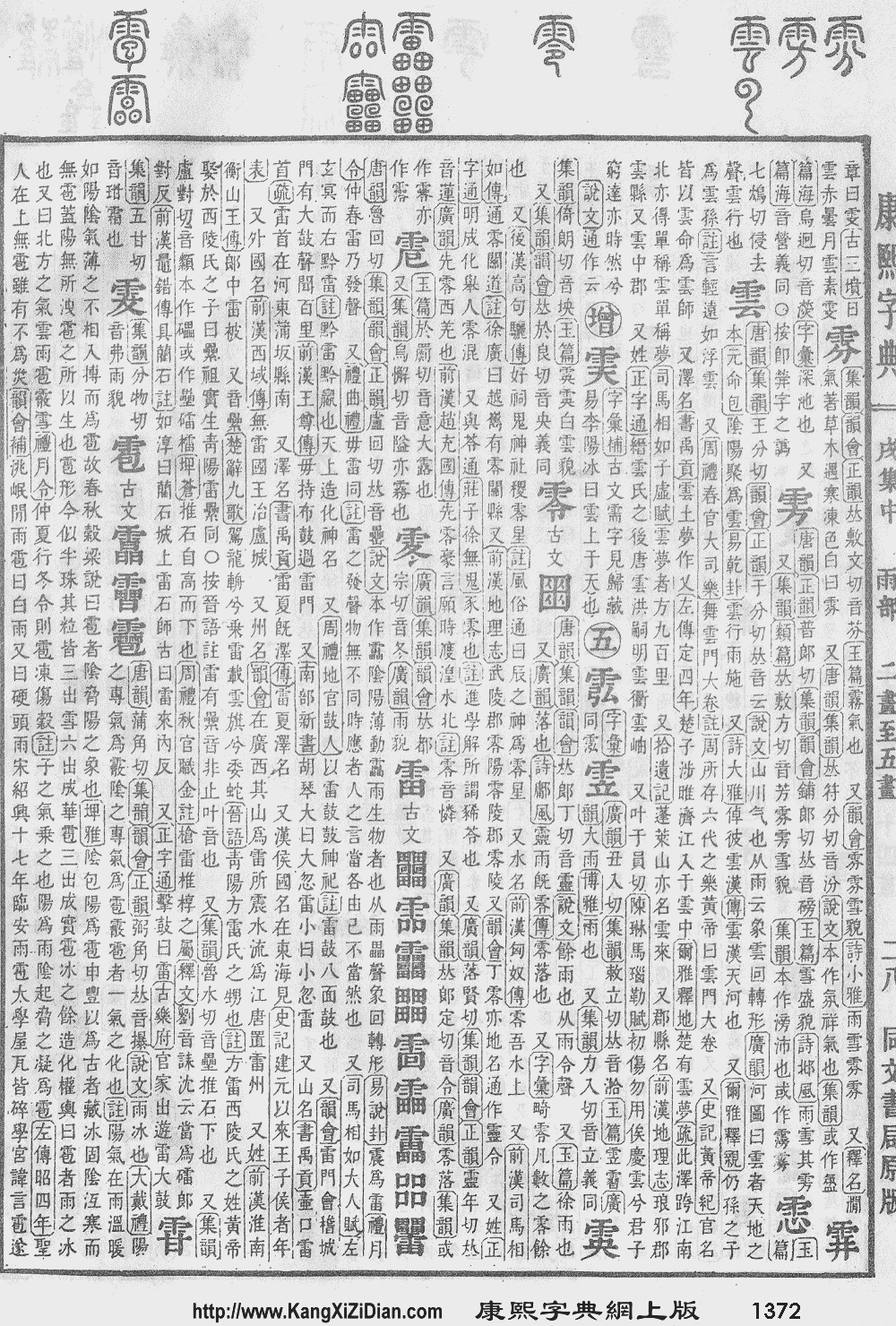
- Kangxi Dictionary: page 1372, character 14
- Dai Kanwa Jiten: character 42245
- Dae Jaweon: page 1881, character 3
- Hanyu Da Zidian (first edition): volume 6, page 4060, character 2
- Unihan data for U+96F7
- Unihan data for U+F949
Chinese
| trad. | 雷 | |
|---|---|---|
| simp. # | 雷 | |
| alternative forms | ||
Glyph origin
| Old Chinese | |
|---|---|
| 摞 | *roːl, *roːls |
| 騾 | *roːl |
| 螺 | *roːl |
| 蔂 | *roːl, *rul |
| 虆 | *roːl, *rul |
| 瘰 | *roːlʔ |
| 礌 | *ruːl, *ruːls |
| 雷 | *ruːl |
| 擂 | *ruːl, *ruːls |
| 攂 | *ruːl, *ruːls |
| 礧 | *ruːll, *ruːlʔ, *ruːls |
| 儡 | *ruːl, *ruːlʔ, *ruːls |
| 瓃 | *ruːl, *rul, *ruls |
| 櫑 | *ruːl, *ruːlʔ |
| 鑘 | *ruːl, *ruːlʔ |
| 鐳 | *ruːl |
| 畾 | *ruːl |
| 轠 | *ruːl, *rulʔ |
| 罍 | *ruːl |
| 蕾 | *ruːlʔ |
| 癗 | *ruːlʔ |
| 磥 | *ruːlʔ |
| 累 | *ruːls, *rolʔ, *rols |
| 儽 | *ruːls, *rul |
| 樏 | *rolʔ, *rul |
| 鸓 | *rul, *rulʔ |
| 嫘 | *rul |
| 纍 | *rul, *ruls |
| 欙 | *rul |
| 纝 | *rul |
| 壘 | *rulʔ |
| 櫐 | *rulʔ |
| 蘽 | *rulʔ |
| 藟 | *rulʔ |
| 讄 | *rulʔ |
Ancient simplification of 靁, which was a phono-semantic compound (形聲/形声, OC *ruːl) : semantic 雨 (“rain”) + phonetic 畾 (OC *ruːl).
Etymology
The Min Bei initial s- may be due to the loss of a pre-initial which might have been a velar considering dialect forms in Henan, Hebei and Shanxi, e.g. Taiyuan Jin 忽雷 (hueh4 lui1) (Schuessler, 2007).
Perhaps from Sino-Tibetan. Compare Mizo râwl (“voice; cry (of an animal); sound”), Tibetan ཁྲོལ (khrol).
Pronunciation
Definitions
雷
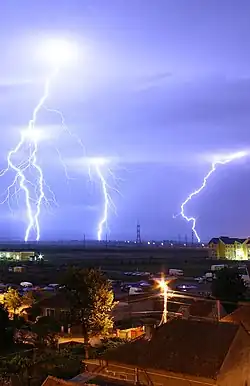
- lightning
- (military, weaponry, in compounds) explosive device
- (colloquial) to astonish; to shock
- (colloquial) astonishment; surprise
- Short for 雷州 (Léizhōu, “Leizhou”).
- (neologism) burdensome
- (neologism) to be burden to others
- (Taiwan, neologism) plot spoiler
- (Hong Kong Cantonese, triad slang) two
- (Hong Kong Cantonese, slang) loyalty
- a surname
Synonyms
Usage notes
- 雷 (léi) does not clearly distinguish between "lightning" and "thunder". To clarify, use 閃電/闪电 (shǎndiàn, “lightning”) or 雷聲/雷声 (léishēng, “thunder”).
- Not all military explosive devices are called 雷 (léi). Another commonly used name is 彈/弹 (dàn), which is more often used with propelled explosive weapons.
Compounds
- 乾打雷/干打雷
- 五雷轟頂/五雷轰顶
- 伯雷
- 克雷因
- 哈姆雷特
- 哈雷彗星 (Hāléi huìxīng)
- 地雷 (dìléi)
- 大發雷霆/大发雷霆 (dàfāléitíng)
- 大雷雨
- 天打雷劈
- 天雷
- 奔雷
- 奔馳如雷/奔驰如雷
- 如雷
- 如雷灌耳 (rú léi guàn ěr)
- 如雷貫耳/如雷贯耳 (rúléiguàněr)
- 射控雷達/射控雷达
- 導向魚雷/导向鱼雷
- 巴雷利
- 布雷 (bùléi)
- 布雷克
- 布雷克磨
- 布雷爾港/布雷尔港
- 布鼓雷門/布鼓雷门
- 弗雷特 (Fúléitè)
- 忽雷 (hūléi)
- 悶雷/闷雷 (mènléi)
- 打悶雷/打闷雷
- 打攔頭雷/打拦头雷
- 打雷 (dǎléi)
- 拖雷 (Tuōléi)
- 掌心雷 (zhǎngxīnléi)
- 掌聲雷動/掌声雷动 (zhǎngshēngléidòng)
- 掃雷/扫雷 (sǎoléi)
- 掀雷抉電/掀雷抉电
- 旱天雷
- 春雷
- 暴燥如雷
- 暴跳如雷 (bàotiào-rúléi)
- 暴躁如雷
- 暴雷 (bàoléi)
- 暴雷也似
- 歡呼雷動/欢呼雷动
- 歡聲雷動/欢声雷动
- 氣象雷達/气象雷达
- 水雷 (shuǐléi)
- 火山雷 (huǒshānléi)
- 炸雷 (zhàléi)
- 烈火轟雷/烈火轰雷
- 焦雷
- 熱雷雨/热雷雨
- 爆燥如雷
- 瓦釜雷鳴/瓦釜雷鸣
- 甕雷/瓮雷 (wèngléi)
- 疾如雷電/疾如雷电
- 疾雷
- 疾風迅雷/疾风迅雷
- 百面雷
- 竹地雷
- 聚蚊成雷
- 聞雷失箸/闻雷失箸
- 肚裡雷鳴/肚里雷鸣
- 落雷 (luòléi)
- 蚊雷
- 蟄雷/蛰雷
- 訇雷震
- 詭雷/诡雷
- 起雷 (qǐléi)
- 轟然雷動/轰然雷动
- 轟雷掣電/轰雷掣电
- 轟雷貫耳/轰雷贯耳
- 迅雷 (xùnléi)
- 避雷 (bìléi)
- 醉雷公
- 金鼓雷鳴/金鼓雷鸣
- 防空雷達/防空雷达
- 陳布雷/陈布雷
- 陳雷膠漆/陈雷胶漆
- 難越雷池/难越雷池
- 雷丸 (léiwán)
- 雷人 (léirén)
- 雷公 (léigōng)
- 雷公嘴
- 雷公藤
- 雷劈
- 雷動/雷动 (léidòng)
- 雷區/雷区 (léiqū)
- 雷厲/雷厉
- 雷厲風行/雷厉风行 (léilìfēngxíng)
- 雷厲風飛/雷厉风飞
- 雷同 (léitóng)
- 雷嗔電怒/雷嗔电怒
- 雷城
- 雷堆
- 雷塘
- 雷多公路
- 雷大雨小
- 雷害
- 雷家店 (Léijiādiàn)
- 雷家祠 (Léijiācí)
- 雷射 (léishè)
- 雷射刀
- 雷射唱片
- 雷射唱盤/雷射唱盘
- 雷射攝影/雷射摄影
- 雷射音響/雷射音响
- 雷山 (Léishān)
- 雷峰塔
- 雷州 (Léizhōu)
- 雷州半島/雷州半岛 (Léizhōu Bàndǎo)
- 雷巾
- 雷師/雷师
- 雷打不動/雷打不动 (léi dǎ bù dòng)
- 雷抃
- 雷擊/雷击 (léijī)
- 雷暴 (léibào)
- 雷根主義/雷根主义 (léigēnzhǔyì)
- 雷殛
- 雷池 (léichí)
- 雷汞 (léigǒng)
- 雷河 (Léihé)
- 雷火 (léihuǒ)
- 雷琴 (léiqín)
- 雷神 (léishén)
- 雷神鞭
- 雷管 (léiguǎn)
- 雷聲/雷声 (léishēng)
- 雷聲大,雨點小/雷声大,雨点小 (léishēng dà, yǔdiǎn xiǎo)
- 雷芽
- 雷衕/雷同
- 雷諾瓦/雷诺瓦
- 雷車/雷车
- 雷轟電掣/雷轰电掣
- 雷達/雷达 (léidá)
- 雷達搜索/雷达搜索
- 雷達站/雷达站
- 雷達追蹤/雷达追踪
- 雷部
- 雷鋒/雷锋 (Léi Fēng)
- 雷鋒運動/雷锋运动
- 雷陣雨/雷阵雨 (léizhènyǔ)
- 雷陳膠漆/雷陈胶漆
- 雷雨 (léiyǔ)
- 雷雨交加
- 雷雨胞
- 雷雨雲/雷雨云
- 雷雲/雷云 (léiyún)
- 雷電/雷电 (léidiàn)
- 雷電交加/雷电交加 (léidiànjiāojiā)
- 雷霆 (léitíng)
- 雷震
- 雷霆之怒
- 雷霆萬鈞/雷霆万钧 (léitíngwànjūn)
- 雷霆電雹/雷霆电雹
- 雷鞭
- 雷音
- 雷馬克/雷马克
- 雷鳥/雷鸟 (léiniǎo)
- 雷鳴/雷鸣 (léimíng)
- 雷鳴瓦釜/雷鸣瓦釜
- 雷鳴遠/雷鸣远
- 雷鼓
- 雷龍/雷龙
- 震天雷
- 霹雷 (pīléi)
- 順風雷/顺风雷
- 風掣雷行/风掣雷行
- 風雷/风雷 (fēngléi)
- 風雷之性/风雷之性
- 風雷火炮/风雷火炮
- 魚雷/鱼雷 (yúléi)
- 魚雷快艇/鱼雷快艇
- 鴨子聽雷/鸭子听雷
- 麻雷子 (máléizi)
- 鼙鼓雷鳴/鼙鼓雷鸣
- 鼻鼾如雷
- 鼾聲如雷/鼾声如雷
- 鼾聲雷動/鼾声雷动
- 鼾齁如雷
- 齁聲雷起/齁声雷起
References
- “雷”, in 漢語多功能字庫 (Multi-function Chinese Character Database), 香港中文大學 (the Chinese University of Hong Kong), 2014–
- “Entry #10313”, in 臺灣閩南語常用詞辭典 [Dictionary of Frequently-Used Taiwan Minnan] (in Chinese and Min Nan), Ministry of Education, R.O.C., 2023.
Japanese
Readings
Compounds
- 雷雨 (raiu)
- 雷雲 (raiun)
- 雷管 (raikan)
- 雷撃 (raigeki)
- 雷公 (raikō)
- 雷光 (raikō)
- 雷獣 (raijū, “thunder beast”)
- 雷神 (raijin)
- 雷声 (raisei)
- 雷鳥 (raichō, “rock ptarmigan, snow grouse”)
- 雷電 (raiden)
- 雷同 (raidō)
- 雷名 (raimei)
- 雷鳴 (raimei)
- 遠雷 (enrai)
- 魚雷 (gyorai)
- 地雷 (jirai)
- 春雷 (shunrai)
- 迅雷 (jinrai)
- 地雷 (chirai)
- 爆雷 (bakurai)
- 避雷 (hirai)
- 避雷針 (hiraishin)
- 蚊雷 (bunrai)
- 落雷 (rakurai)
Etymology 1
| Kanji in this term |
|---|
| 雷 |
| かみなり Grade: S |
| kun’yomi |
Originally a compound of 神 (kami, “god, spirit”) + 鳴り (nari, 連用形 (ren'yōkei, “stem or continuative form”) of the verb 鳴る (naru)).[1][2][3]
Pronunciation
Noun
雷 • (kaminari)
- thunder (loud sound caused by expansion of rapidly heated air)
- Synonym: 雷鳴 (raimei)
- lightning, thunderbolt
- 1999 February 4, “サンダー・キッズ [Thunder Kid]”, in Vol.1, Konami:
- 雷をからだの中に蓄電させている。泣かせたときは危険。
- Kaminari o karada no naka ni chikuden saseteiru. Nakaseta toki wa kiken.
- He stores lightning inside his body. He’s very dangerous when he cries.
- 雷をからだの中に蓄電させている。泣かせたときは危険。
- 1999 March 1, “エレキッズ [Elekid]”, in BOOSTER 1, Konami:
- 雷攻撃は意外と強い。甘く見ると感電するぞ。
- Kaminarikōgeki wa igai to tsuyoi. Amaku miru to kanden suru zo.
- It has a surprisingly powerful lightning attack. However, its electrocution tends to be underestimated.
- 雷攻撃は意外と強い。甘く見ると感電するぞ。
- thunder god
Usage notes
This kaminari reading is the most common reading when used as a standalone noun.
Derived terms
- 神鳴 (Kaminari)
- 雷烏賊 (kaminari ika)
- 雷親父 (kaminari oyaji)
- 雷雲 (kaminarigumo)
- 雷声 (kaminarigoe)
- 雷豆腐 (kaminaridōfu)
- 雷の陣 (kaminari no jin)
- 雷鳴の壺 (Kaminari no Tsubo)
- 雷の間 (kaminari no ma)
- 雷林 (Kaminaribayashi)
- 雷干し (kaminariboshi), 雷乾し (kaminariboshi)
- 雷門 (Kaminarimon)
- 雷除け (kaminariyoke)
- 地雷 (jigaminari)
- 虫出し雷 (mushidashi kaminari)
Idioms
Etymology 2
| Kanji in this term |
|---|
| 雷 |
| かんなり Grade: S |
| irregular |
| Alternative spellings |
|---|
| 雷鳴り 雷鳴 |
/kaminari/ → /kamʉnari/ → /kanːari/
Pronunciation
- IPA(key): [kã̠nːa̠ɾʲi]
Noun
雷 • (kannari)
- (rare, archaic) Same as かみなり (kaminari) above
Derived terms
- 雷の陣 (kannari no jin)
Proper noun
雷 • (Kannari)
Etymology 3
| Kanji in this term |
|---|
| 雷 |
| いかずち Grade: S |
| kun’yomi |
⟨ika tu ti⟩ → ⟨ikaduti⟩ → /ikad͡ʑut͡ɕi/ → /ikaʑut͡ɕi/
From Old Japanese.
Originally a compound of 厳 (ika, “sternness, terribleness, imposingness”) + つ (tsu, Old Japanese possessive particle) + 霊 (chi, “spirit, force, essence”).[1][2][3]
Pronunciation
- IPA(key): [ika̠zɨᵝt͡ɕi]
Noun
Etymology 4
| Kanji in this term |
|---|
| 雷 |
| なるかみ Grade: S |
| irregular |
| Alternative spellings |
|---|
| 鳴る神 鳴神 |
Compound of 鳴る (naru, “to cry out, to call”) + 神 (kami, “god, spirit”).[1][3]
Pronunciation
- IPA(key): [na̠ɾɯ̟ᵝka̠mʲi]
Proper noun
雷 • (Narukami)
- one of the eighteen styles of kabuki
- This sense is more commonly spelled as 鳴神.
Usage notes
Used more in compounds than on its own. As a standalone noun, the kaminari reading is the most common.
Derived terms
- 雷の間 (rai no ma)
- 雷斧 (raifu)
- 機雷 (kirai)
References
- 1988, 国語大辞典(新装版) (Kokugo Dai Jiten, Revised Edition) (in Japanese), Tōkyō: Shogakukan
- 1995, 大辞泉 (Daijisen) (in Japanese), Tōkyō: Shogakukan, →ISBN
- 2006, 大辞林 (Daijirin), Third Edition (in Japanese), Tōkyō: Sanseidō, →ISBN
- 1998, NHK日本語発音アクセント辞典 (NHK Japanese Pronunciation Accent Dictionary) (in Japanese), Tōkyō: NHK, →ISBN
Kikai
Readings
- Kun: はんまい (hanmai, 雷)
References
- “はんまい【雷】” in JLect - Japonic Languages and Dialects Database Dictionary, 2019.
Korean
Etymology
From Middle Chinese 雷 (MC lwoj). Recorded as Middle Korean 뢰 (lwoy) (Yale: lwoy) in Hunmong Jahoe (訓蒙字會 / 훈몽자회), 1527.
Compounds
- 뇌성 (雷聲, noeseong)
- 뇌관 (雷管, noegwan, “detonator”)
- 지뢰 (地雷, jiroe, “land mine”)
- 어뢰 (魚雷, eoroe, “torpedo”)
- 낙뢰 (落雷, nangnoe, “thunderbolt”)
- 뇌우 (雷雨, noe'u, “thunderstorm”)
- 폭뢰 (爆雷, pongnoe, “depth charge”)
- 피뢰침 (避雷針, piroechim, “lightning rod”)
Okinawan
References
- “かんない【雷】” in JLect - Japonic Languages and Dialects Database Dictionary, 2019.
Old Japanese
Etymology
Originally a compound of 嚴 (ika, “sternness, terribleness, imposingness”) + つ (tu, possessive particle) + 靈 (ti, “spirit, force, essence”).[1][2][3]
Noun
雷 (ikaduti) (kana いかづち)
Descendants
- Japanese: 雷 (ikazuchi)
See also
- 鳴神 (narukami2)
References
- 1988, 国語大辞典(新装版) (Kokugo Dai Jiten, Revised Edition) (in Japanese), Tōkyō: Shogakukan
- 1995, 大辞泉 (Daijisen) (in Japanese), Tōkyō: Shogakukan, →ISBN
- 2006, 大辞林 (Daijirin), Third Edition (in Japanese), Tōkyō: Sanseidō, →ISBN
- Motoori Norinaga (2007), Michael F. Marra, editor, The Poetics of Motoori Norinaga: A Hermeneutical Journey, University of Hawaii Press, →ISBN, page 230