餘
| ||||||||
Translingual
| Traditional | Lua error in Module:utilities at line 142: attempt to perform arithmetic on local 'h' (a nil value) |
|---|---|
| Shinjitai | 余 |
| Simplified | 余/馀 |
Alternative forms
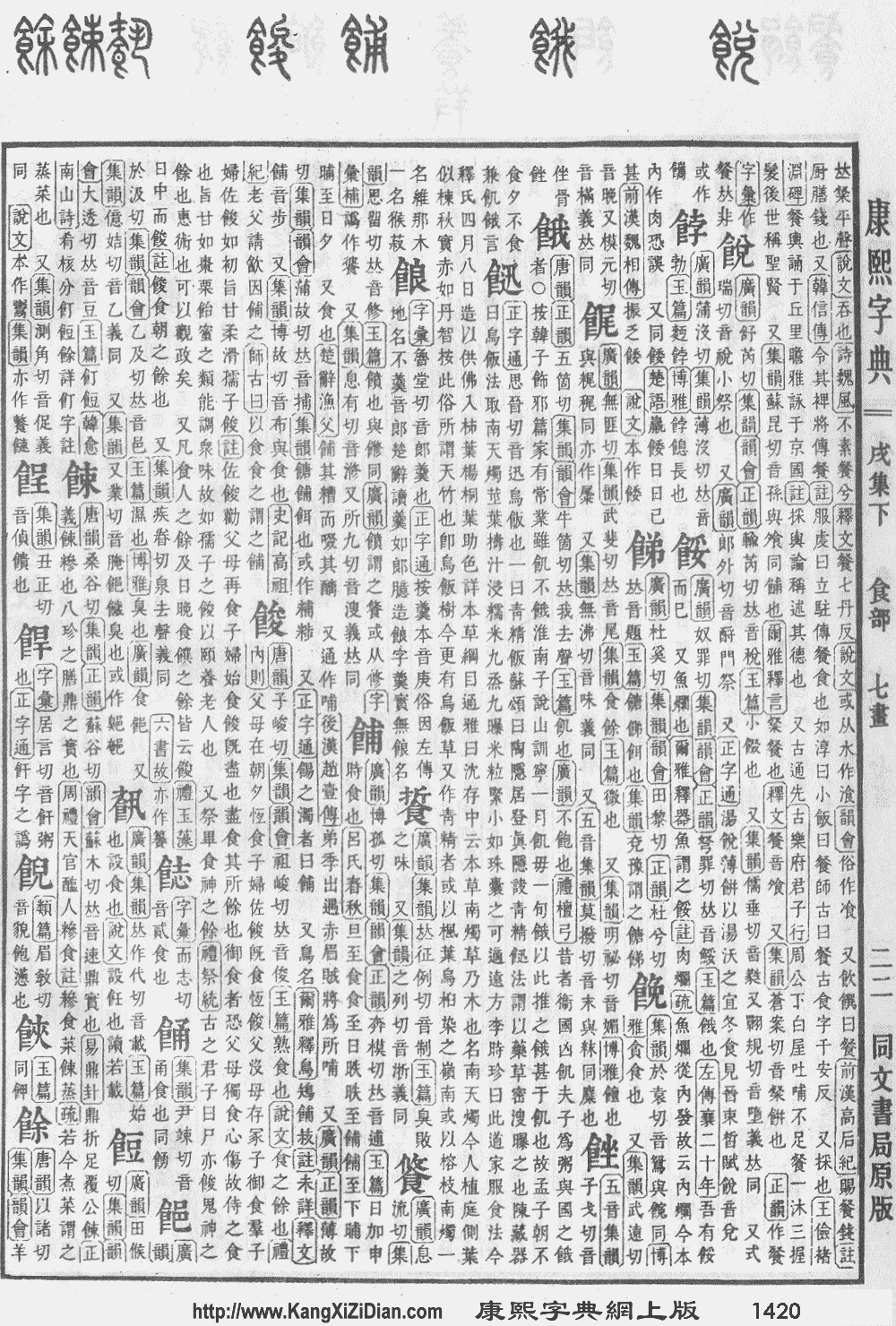
- In Japanese kyūjitai and Korean hanja, this character is written with the left component 𩙿 which is also the historical form found in the Kangxi dictionary.
- In traditional Chinese and Vietnamese Nôm, the left component is written 飠 instead.
Han character
餘 (Kangxi radical 184, 食+7, 15 strokes in Chinese, 16 strokes in Japanese and Korean, cangjie input 人戈人一木 (OIOMD), four-corner 88794, composition ⿰飠余(GHTV) or ⿰𩙿余(JK))
Derived characters
- 𬉣, 𮣧, 𧃋
Related characters
- 余 (Japanese shinjitai and simplified Chinese) - Note that 余 and 餘 are unrelated in traditional Chinese
- 馀 (Non-standard form in mainland China. Only used when it is desirable to distinguish 餘 from 余)
References
- Kangxi Dictionary: page 1420, character 25
- Dai Kanwa Jiten: character 44185
- Dae Jaweon: page 1945, character 24
- Hanyu Da Zidian (first edition): volume 7, page 4456, character 9
- Unihan data for U+9918
Chinese
Lua error in Module:utilities at line 142: attempt to perform arithmetic on local 'h' (a nil value)
Glyph origin
| Historical forms of the character 餘 | |
|---|---|
| Shuowen Jiezi (compiled in Han) | Liushutong (compiled in Ming) |
| Small seal script | Transcribed ancient scripts |
 |
 |
Characters in the same phonetic series (余) (Zhengzhang, 2003)
| Old Chinese | |
|---|---|
| 斜 | *lja, *laː |
| 茶 | *rlaː |
| 荼 | *rlaː, *ɦlja, *l'aː |
| 梌 | *rlaː, *l̥ʰaː, *l'aː |
| 搽 | *rlaː |
| 塗 | *rlaː, *l'aː |
| 佘 | *ɦlja |
| 賒 | *hljaː |
| 畬 | *hljaː, *la |
| 舍 | *hljaːʔ, *hljaːs |
| 捨 | *hljaːʔ |
| 騇 | *hljaːʔ, *hljaːs |
| 涻 | *hljaːs |
| 稌 | *l̥ʰaː, *l̥ʰaːʔ |
| 悇 | *l̥ʰaː, *l̥ʰas, *las |
| 庩 | *l̥ʰaː |
| 捈 | *l̥ʰaː, *l'aː |
| 途 | *l'aː |
| 酴 | *l'aː |
| 駼 | *l'aː |
| 鵌 | *l'aː, *la |
| 涂 | *l'aː, *l'a |
| 嵞 | *l'aː |
| 峹 | *l'aː |
| 筡 | *l'aː, *l̥ʰa |
| 蒤 | *l'aː |
| 徐 | *lja |
| 俆 | *lja |
| 敘 | *ljaʔ |
| 漵 | *ljaʔ |
| 除 | *l'a, *l'as |
| 篨 | *rla |
| 滁 | *rla |
| 蒢 | *rla |
| 蜍 | *ɦlja, *la |
| 鵨 | *hljaː |
| 瑹 | *hlja |
| 余 | *la |
| 餘 | *la |
| 艅 | *la |
| 狳 | *la |
| 雓 | *la |
| 悆 | *las |
Phono-semantic compound (形聲/形声, OC *la) : semantic 食 + phonetic 余 (OC *la).
Pronunciation 1
Definitions
餘
Usage notes
In simplified Chinese, 馀 is a non-standard form of 餘 only used as a surname or when it is desirable to distinguish 餘 from 余. 馀 was formerly official in 简化字总表 (1964); this character was removed in 通用规范汉字表 (2013).
In traditional Chinese, the surnames 餘 and 余 are distinct, with the latter being much more common among the population.
Compounds
- 一覽無餘/一览无余 (yīlǎnwúyú)
- 三餘/三余
- 不留餘地/不留余地 (bùliúyúdì)
- 不遺餘力/不遗余力 (bùyíyúlì)
- 事不有餘/事不有余
- 保留盈餘/保留盈余
- 公餘/公余 (gōngyú)
- 公餘之暇/公余之暇
- 其餘/其余 (qíyú)
- 刑餘/刑余
- 剩餘/剩余 (shèngyú)
- 剩餘價值/剩余价值 (shèngyújiàzhí)
- 劫後餘燼/劫后余烬
- 劫後餘生/劫后余生 (jiéhòuyúshēng)
- 劫餘/劫余
- 唾餘/唾余
- 夕陽餘暉/夕阳余晖
- 多餘/多余 (duōyú)
- 嬴餘/嬴余
- 安享餘年/安享余年
- 富貴有餘/富贵有余
- 富餘/富余
- 寬餘/宽余
- 尸居餘氣/尸居余气 (shījūyúqì)
- 年年有餘/年年有余 (niánniányǒuyú)
- 廚餘/厨余 (chúyú)
- 得意之餘/得意之余
- 心有餘悸/心有余悸 (xīnyǒuyújì)
- 心餘力絀/心余力绌 (xīnyúlìchù)
- 恢恢有餘/恢恢有余
- 戶有餘糧/户有余粮
- 扶餘國/扶余国
- 掃地無餘/扫地无余
- 斷紙餘墨/断纸余墨 (duànzhǐyúmò)
- 有餘/有余 (yǒuyú)
- 業餘/业余 (yèyú)
- 業餘選手/业余选手
- 業餘電臺/业余电台
- 歸餘/归余
- 死有餘僇/死有余僇
- 死有餘罪/死有余罪
- 死有餘責/死有余责
- 死有餘辜/死有余辜 (sǐyǒuyúgū)
- 殘渣餘孽/残渣余孽 (cánzhāyúniè)
- 殘餘/残余 (cányú)
- 流風餘俗/流风余俗
- 流風餘澤/流风余泽
- 流風餘韻/流风余韵
- 淨餘/净余
- 淋餘土/淋余土
- 游刃有餘/游刃有余 (yóurènyǒuyú)
- 燼餘/烬余
- 王餘魚/王余鱼
- 留有餘地/留有余地
- 留餘地/留余地
- 病餘/病余
- 盈餘/盈余 (yíngyú)
- 目無餘子/目无余子 (mùwúyúzǐ)
- 禹餘糧/禹余粮
- 積善餘慶/积善余庆
- 積惡餘殃/积恶余殃
- 節餘/节余 (jiéyú)
- 紆餘/纡余
- 累積盈餘/累积盈余
- 結餘/结余 (jiéyú)
- 綽有餘裕/绰有余裕
- 綽綽有餘/绰绰有余 (chuòchuòyǒuyú)
- 緒餘/绪余 (xùyú)
- 編餘/编余 (biānyú)
- 羨餘/羡余 (xiànyú)
- 耕九餘三/耕九余三
- 耳餘/耳余
- 腐餘/腐余
- 草堂詩餘/草堂诗余
- 茶餘/茶余
- 茶餘客話/茶余客话
- 茶餘酒後/茶余酒后 (cháyújiǔhòu)
- 茶餘飯後/茶余饭后 (cháyúfànhòu)
- 茶餘飯飽/茶余饭饱
- 虎口餘生/虎口余生 (hǔkǒuyúshēng)
- 血餘/血余
- 行有餘力/行有余力 (xíngyǒuyúlì)
- 衣冠緒餘/衣冠绪余
- 詞餘/词余 (cíyú)
- 詩餘/诗余 (shīyú)
- 課餘/课余 (kèyú)
- 諸餘/诸余
- 讀書三餘/读书三余
- 賸餘/剩余 (shèngyú)
- 贏餘/赢余 (yíngyú)
- 遊刃有餘/游刃有余 (yóurènyǒuyú)
- 遺孽餘烈/遗孽余烈
- 遺芳餘烈/遗芳余烈
- 遺風餘思/遗风余思
- 遺風餘澤/遗风余泽
- 遺風餘烈/遗风余烈
- 鋒鏑餘生/锋镝余生
- 零餘子/零余子
- 餘下/余下 (yúxià)
- 餘事/余事
- 餘光/余光
- 餘刃/余刃
- 餘切/余切 (yúqiē)
- 餘利/余利 (yúlì)
- 餘割/余割 (yúgē)
- 餘力/余力 (yúlì)
- 餘勇可賈/余勇可贾 (yúyǒngkěgǔ)
- 餘味/余味 (yúwèi)
- 餘味無窮/余味无穷
- 餘喘/余喘
- 餘地/余地 (yúdì)
- 餘外/余外
- 餘妙繞梁/余妙绕梁
- 餘姚/余姚 (Yúyáo)
- 餘威/余威 (yúwēi)
- 餘姚之學/余姚之学
- 餘子/余子
- 餘子碌碌/余子碌碌
- 餘存/余存
- 餘孽/余孽 (yúniè)
- 餘年/余年 (yúnián)
- 餘弦/余弦 (yúxián)
- 餘弦定律/余弦定律
- 餘悸/余悸 (yújì)
- 餘悸猶存/余悸犹存
- 餘慶/余庆 (yúqìng)
- 餘數/余数 (yúshù)
- 餘明/余明
- 餘映/余映
- 餘暇/余暇 (yúxiá)
- 餘暉/余晖 (yúhuī)
- 餘杯冷炙/余杯冷炙
- 餘桃啗君/余桃啗君
- 餘桶/余桶
- 餘業遺烈/余业遗烈
- 餘款/余款 (yúkuǎn)
- 餘步/余步
- 餘殃/余殃
- 餘毒/余毒 (yúdú)
- 餘波/余波 (yúbō)
- 餘波盪漾/余波荡漾
- 餘溫/余温 (yúwēn)
- 餘瀝/余沥
- 餘烈/余烈
- 餘熱/余热 (yúrè)
- 餘燼/余烬 (yújìn)
- 餘燼復然/余烬复然
- 餘珍璧謝/余珍璧谢
- 餘生/余生 (yúshēng)
- 餘眾/余众 (yúzhòng)
- 餘竅/余窍
- 餘糧/余粮 (yúliáng)
- 餘緒/余绪 (yúxù)
- 餘缺/余缺 (yúquē)
- 餘羨/余羡
- 餘膏剩馥/余膏剩馥
- 餘興/余兴 (yúxìng)
- 餘興節目/余兴节目
- 餘蓄/余蓄
- 餘蔭/余荫
- 餘裕/余裕 (yúyù)
- 餘角/余角 (yújiǎo)
- 餘論/余论
- 餘貾/余𰷢
- 餘酲/余酲
- 餘閏/余闰
- 餘閒/余闲 (yúxián)
- 餘震/余震 (yúzhèn)
- 餘霞成綺/余霞成绮
- 餘音/余音 (yúyīn)
- 餘音嫋嫋/余音袅袅
- 餘音繞梁/余音绕梁
- 餘韻/余韵
- 餘韻流風/余韵流风
- 餘響繞梁/余响绕梁
- 餘額/余额 (yú'é)
- 餘額交割/余额交割
- 餘風/余风
- 餘食贅行/余食赘行
- 餕餘/馂余
- 餘黨/余党 (yúdǎng)
- 鹽餘/盐余
- 齒牙餘論/齿牙余论
Pronunciation 2
Japanese
| 余 | |
| Lua error in Module:utilities at line 142: attempt to perform arithmetic on local 'h' (a nil value) |
Usage notes
余 is the preferred form used in modern Japanese.
Korean
Vietnamese
Han character
- This term needs a translation to English. Please help out and add a translation, then remove the text
{{rfdef}}.
References
This article is issued from Wiktionary. The text is licensed under Creative Commons - Attribution - Sharealike. Additional terms may apply for the media files.