glas
Afrikaans
Etymology
From Dutch glas, from Middle Dutch glas, from Old Dutch glas, from Proto-West Germanic *glas, from Proto-Germanic *glasą, from Proto-Indo-European *ǵʰel- (“to shine, shimmer, glow”).
Pronunciation
- IPA(key): /χlas/
Audio (file)
Noun
Derived terms
- glashuis
Cimbrian
Etymology
From Middle High German glas, from Old High German glas, from Proto-West Germanic *glas, Proto-Germanic *glasą (“glass”). Cognate with German Glas, English glass.
Noun
glas n (plural gléezar, diminutive glèzale) (Luserna, Sette Comuni)
Derived terms
References
- “glas” in Cimbrian, Ladin, Mòcheno: Getting to know 3 peoples. 2015. Servizio minoranze linguistiche locali della Provincia autonoma di Trento, Trento, Italy.
- “glas” in Martalar, Umberto Martello; Bellotto, Alfonso (1974) Dizionario della lingua Cimbra dei Sette Communi vicentini, 1st edition, Roana, Italy: Instituto di Cultura Cimbra A. Dal Pozzo
Cornish
Etymology
From Middle Cornish glas, from Proto-Brythonic *glas, from Proto-Celtic *glastos.
Pronunciation
- (Revived Middle Cornish) IPA(key): [ɡlaːz]
- (Revived Late Cornish) IPA(key): [ɡlæːz]
Mutation
| Cornish consonant mutation | |||||
|---|---|---|---|---|---|
| unmutated | soft | aspirate | hard | mixed | mixed after 'th |
| glas | las | unchanged | klas | unchanged | unchanged |
Dalmatian
Danish
Etymology
From Old Norse glas(keri), itself borrowed from Middle Low German glas, from Old Saxon glas.
Noun
Inflection
Derived terms
Descendants
- → Icelandic: glas
Further reading
Dutch
Etymology
From Middle Dutch glas, from Old Dutch glas, from Proto-West Germanic *glas, from Proto-Germanic *glasą, from Proto-Indo-European *ǵʰel- (“to shine, shimmer, glow”). Compare Low German Glas, German Glas, English glass, West Frisian glês, Icelandic gler.
Pronunciation
- IPA(key): /ɣlɑs/
audio (file) - Hyphenation: glas
- Rhymes: -ɑs
Noun
glas n (plural glazen, diminutive glaasje n)
- (uncountable) glass (material)
- Vensters zijn gemaakt van glas. ― Windows are made of glass.
- (countable) glass (vessel)
- Staan er al glazen op tafel? ― Are there glasses on the table yet?
- (countable) glass (quantity)
- Drink even een glas water. ― Drink a glass of water.
Derived terms
Descendants
Further reading
- “glas” in Woordenlijst Nederlandse Taal – Officiële Spelling, Nederlandse Taalunie. [the official spelling word list for the Dutch language]
Anagrams
Faroese
Etymology
From Old Norse glas(keri), itself borrowed from Middle Low German glas, from Old Saxon glas.
Pronunciation
- IPA(key): /klɛaːs/
Noun
glas n (genitive singular glas, plural gløs)
- glass (material)
- glass (beverage container)
- glass (quantity)
- little bottle
Declension
| Declension of glas | ||||
|---|---|---|---|---|
| n12 | singular | plural | ||
| indefinite | definite | indefinite | definite | |
| nominative | glas | glasið | gløs | gløsini |
| accusative | glas | glasið | gløs | gløsini |
| dative | glasi | glasinum | gløsum | gløsunum |
| genitive | glas | glasins | glasa | glasanna |
French
Etymology
Inherited from Vulgar Latin *classum, from Latin classicum (“trumpet signal”).
Pronunciation
- IPA(key): /ɡla/, /ɡlɑ/
- (France) IPA(key): /ɡla/, /ɡlɑ/
Audio (Paris) (file) - Rhymes: -ɑ
Derived terms
Further reading
- “glas”, in Trésor de la langue française informatisé [Digitized Treasury of the French Language], 2012.
Icelandic
Etymology
From Old Norse glas(keri), itself borrowed from Middle Low German glas, from Old Saxon glas.
Pronunciation
- IPA(key): /klaːs/
- Rhymes: -aːs
Declension
Derived terms
- andaglas
- stundaglas
- tilraunaglas
- vatnsglas
Irish
Pronunciation
Etymology 1
From Old Irish glas, from Proto-Celtic *glastos.
Adjective
glas (genitive singular masculine glais, genitive singular feminine glaise, plural glasa, comparative glaise)
- green (of grass, trees, etc.)
- Proverb: Is glas na cnoic i bhfad uainn ― Far-off hills are green.
- young and fresh, unripe
- immature, unseasoned
- raw, inexperienced
- unwrought
- weak in sustenance
- pale, sickly-hued
- grey (of sheep, horses, cloth, wool, etc.; of eyes)
- (politics) green
- (literary) blue
Declension
| Singular | Plural (m/f) | |||
|---|---|---|---|---|
| Positive | Masculine | Feminine | (strong noun) | (weak noun) |
| Nominative | glas | ghlas | glasa; ghlasa² | |
| Vocative | ghlais | glasa | ||
| Genitive | glaise | glasa | glas | |
| Dative | glas; ghlas¹ |
ghlas; ghlais (archaic) |
glasa; ghlasa² | |
| Comparative | níos glaise | |||
| Superlative | is glaise | |||
¹ When the preceding noun is lenited and governed by the definite article.
² When the preceding noun ends in a slender consonant.
Derived terms
- arán glas (“wall pennywort”)
- barrghlas (“green-topped”)
- glas- (“green”)
- glasaigh (“become green”)
- glasra (“greenery; vegetable”)
- scothghlas (“greenish”, adjective)
Declension
Declension
Verb
glas (present analytic glasann, future analytic glasfaidh, verbal noun glasadh, past participle glasta)
- (transitive, intransitive) Alternative form of glasaigh (“become green”)
Conjugation
| singular | plural | relative | autonomous | ||||||
|---|---|---|---|---|---|---|---|---|---|
| first | second | third | first | second | third | ||||
| indicative | present | glasaim | glasann tú; glasair† |
glasann sé, sí | glasaimid | glasann sibh | glasann siad; glasaid† |
a ghlasann; a ghlasas / a nglasann*; a nglasas* |
glastar |
| past | ghlas mé; ghlasas | ghlas tú; ghlasais | ghlas sé, sí | ghlasamar; ghlas muid | ghlas sibh; ghlasabhair | ghlas siad; ghlasadar | a ghlas / ar ghlas* |
glasadh | |
| past habitual | ghlasainn / nglasainn‡‡ | ghlastá / nglastᇇ | ghlasadh sé, sí / nglasadh sé, s퇇 | ghlasaimis; ghlasadh muid / nglasaimis‡‡; nglasadh muid‡‡ | ghlasadh sibh / nglasadh sibh‡‡ | ghlasaidís; ghlasadh siad / nglasaidís‡‡; nglasadh siad‡‡ | a ghlasadh / a nglasadh* |
ghlastaí / nglasta퇇 | |
| future | glasfaidh mé; glasfad |
glasfaidh tú; glasfair† |
glasfaidh sé, sí | glasfaimid; glasfaidh muid |
glasfaidh sibh | glasfaidh siad; glasfaid† |
a ghlasfaidh; a ghlasfas / a nglasfaidh*; a nglasfas* |
glasfar | |
| conditional | ghlasfainn / nglasfainn‡‡ | ghlasfá / nglasfᇇ | ghlasfadh sé, sí / nglasfadh sé, s퇇 | ghlasfaimis; ghlasfadh muid / nglasfaimis‡‡; nglasfadh muid‡‡ | ghlasfadh sibh / nglasfadh sibh‡‡ | ghlasfaidís; ghlasfadh siad / nglasfaidís‡‡; nglasfadh siad‡‡ | a ghlasfadh / a nglasfadh* |
ghlasfaí / nglasfa퇇 | |
| subjunctive | present | go nglasa mé; go nglasad† |
go nglasa tú; go nglasair† |
go nglasa sé, sí | go nglasaimid; go nglasa muid |
go nglasa sibh | go nglasa siad; go nglasaid† |
— | go nglastar |
| past | dá nglasainn | dá nglastá | dá nglasadh sé, sí | dá nglasaimis; dá nglasadh muid |
dá nglasadh sibh | dá nglasaidís; dá nglasadh siad |
— | dá nglastaí | |
| imperative | glasaim | glas | glasadh sé, sí | glasaimis | glasaigí; glasaidh† |
glasaidís | — | glastar | |
| verbal noun | glasadh | ||||||||
| past participle | glasta | ||||||||
* indirect relative
† archaic or dialect form
‡‡ dependent form used with particles that trigger eclipsis
See also
| bán | liath | dubh |
| dearg; corcairdhearg | oráiste, flannbhuí; donn | buí; bánbhuí |
| líoma-ghlas, glas líoma | glas, uaine | dath an mhiontais |
| cian | gormghlas, spéirghorm | gorm |
| corcairghorm; indeagó | maigeanta; corcra | bándearg |
Noun
glas m (genitive singular glais, nominative plural glais)
- lock
- Is fearr glas ná amhras. (proverb)
- Better safe than sorry.
Declension
Derived terms
- deasc ghlais (“lock-up desk”)
- faoi ghlas (“under lock and key”)
- glais lámh (“handcuffs”)
- glas ascaille (“arm-lock”)
- glas cinn (“head-lock”)
- glas cip (“wooden bolt”)
- glas coime (“waist-lock”)
- glas crochta (“padlock”)
- glas dúbailte (“double lock”)
- glas fiacla (“lock-jaw”)
- glas fraincín (“padlock”)
- glas gunna (“gun-lock”)
- glas moirtíse (“mortise-lock”)
- glas- (“locked, tight, secure”)
- glasadóir (“locksmith”)
- glasáil (“lock”, transitive verb)
- glasaire (“locksmith”)
Declension
Mutation
| Irish mutation | ||
|---|---|---|
| Radical | Lenition | Eclipsis |
| glas | ghlas | nglas |
| Note: Some of these forms may be hypothetical. Not every possible mutated form of every word actually occurs. | ||
Further reading
- Ó Dónaill, Niall (1977), “glas”, in Foclóir Gaeilge–Béarla, Dublin: An Gúm, →ISBN
- Entries containing “glas” in English-Irish Dictionary, An Gúm, 1959, by Tomás de Bhaldraithe.
- Entries containing “glas” in New English-Irish Dictionary by Foras na Gaeilge.
- Quiggin, E. C. (1906) A Dialect of Donegal, Cambridge University Press, page 39
- Sjoestedt, M. L. (1931) Phonétique d’un parler irlandais de Kerry (in French), Paris: Librairie Ernest Leroux, page 21
Middle Dutch
Etymology
From Old Dutch glas, from Proto-Germanic *glasą.
Pronunciation
- IPA(key): /ɣlas/
Descendants
Further reading
- “glas”, in Vroegmiddelnederlands Woordenboek, 2000
- Verwijs, E.; Verdam, J. (1885–1929), “glas”, in Middelnederlandsch Woordenboek, The Hague: Martinus Nijhoff, →ISBN
Middle English
Etymology
Inherited from Old English glæs, from Proto-West Germanic *glas, from Proto-Germanic *glasą.
Pronunciation
- IPA(key): /ˈɡlas/, /ˈɡlaːs/, /ˈɡlɛs/
Noun
glas (plural glasses)
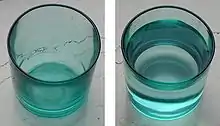
- Glass (substance made with melted sand):
- a. 1394, Geoffrey Chaucer, “General Prologue”, in The Canterbury Tales, lines 151–152:
- Ful semyly hir wympul pynched was /Hir nose tretys, hir eyen greye as glas […]
- Her wimple was folded in quite a seemly way / Her nose [was] slender; her eyes [were] grey like glass […]
- An object made of or containing glass:
- Ground-up glass as used in alchemy and pharmaceuticals.
- A kind of crystal similar in appearance to glass.
- (rare) A shard or fragment of glass.
References
- “glas, n.”, in MED Online, Ann Arbor, Mich.: University of Michigan, 2007, retrieved 2019-02-20.

Norwegian Bokmål
Norwegian Nynorsk
Etymology
From Middle Low German glas.
Pronunciation
- IPA(key): /ɡlɑːs/
See also
- glass (Bokmål)
References
- “glas” in The Nynorsk Dictionary.
Old Irish
Pronunciation
- IPA(key): /ɡlas/
Etymology 1
From Proto-Celtic *glastos.
Adjective
glas
Inflection
| o/ā-stem | |||
|---|---|---|---|
| Singular | Masculine | Feminine | Neuter |
| Nominative | glas | glas | glas |
| Vocative | glais* glas** | ||
| Accusative | glas | glais | |
| Genitive | glais | glaise | glais |
| Dative | glas | glais | glas |
| Plural | Masculine | Feminine/neuter | |
| Nominative | glais | glasa | |
| Vocative | glasu glasa† | ||
| Accusative | glasu glasa† | ||
| Genitive | glas | ||
| Dative | glasaib | ||
| Notes | *modifying a noun whose vocative is different from its nominative **modifying a noun whose vocative is identical to its nominative | ||
Etymology 2
From earlier *glapsâ, which could be related to Old English clyppan (“to clasp, embrace, hold onto”).
Inflection
| Masculine o-stem | |||
|---|---|---|---|
| Singular | Dual | Plural | |
| Nominative | glas | glasL | glaisL |
| Vocative | glais | glasL | glasuH |
| Accusative | glasN | glasL | glasuH |
| Genitive | glaisL | glas | glasN |
| Dative | glasL | glasaib | glasaib |
Initial mutations of a following adjective:
| |||
Mutation
| Old Irish mutation | ||
|---|---|---|
| Radical | Lenition | Nasalization |
| glas | glas pronounced with /ɣ(ʲ)-/ |
nglas |
| Note: Some of these forms may be hypothetical. Not every possible mutated form of every word actually occurs. | ||
Further reading
- G. Toner, M. Ní Mhaonaigh, S. Arbuthnot, D. Wodtko, M.-L. Theuerkauf, editors (2019), “1 glas”, in eDIL: Electronic Dictionary of the Irish Language
- G. Toner, M. Ní Mhaonaigh, S. Arbuthnot, D. Wodtko, M.-L. Theuerkauf, editors (2019), “2 glas”, in eDIL: Electronic Dictionary of the Irish Language
- MacBain, Alexander; Mackay, Eneas (1911), “glas”, in An Etymological Dictionary of the Gaelic Language, Stirling, →ISBN, page 196
Old Saxon
Alternative forms
Etymology
From Proto-West Germanic *glas, from Proto-Germanic *glasą, from Proto-Indo-European *ǵʰel- (“to shine, shimmer, glow”). Compare Old English glæs, Old Dutch glas, Old Frisian gles, Old High German glas, clas, Old Norse gler.
Descendants
- Middle Low German: glas
Romanian
Etymology
Borrowed from Old Church Slavonic гласъ (glasŭ, “voice”), from Proto-Slavic *golsъ.
Pronunciation
- IPA(key): /ɡlas/
- Rhymes: -as
Noun
glas n (plural glasuri)
Declension
References
- glas in DEX online—Dicționare ale limbii române (Dictionaries of the Romanian language)
Scottish Gaelic
Pronunciation
- IPA(key): /kl̪ˠas̪/
- Hyphenation: glas
Etymology 1
From Old Irish glas (descriptive of various shades of light green and blue, passing from grass-green to grey). Cognates include Irish glas and Manx glass.
Adjective
glas (genitive singular masculine glais, genitive singular feminine glaise, nominative plural glasa, comparative glaise)
Declension
Verb
glas (past ghlas, future glasaidh, verbal noun glasadh, past participle glaste)
See also
| bàn, geal | glas | dubh |
| dearg; ruadh | orainds; donn | buidhe; donn |
| uaine | uaine | gorm |
| liath; glas | liath | gorm |
| purpaidh; guirmean | pinc; purpaidh | pinc |
Declension
| Indefinite | ||
|---|---|---|
| Singular | Plural | |
| Nominative | glas | glasan |
| Genitive | glaise | ghlas |
| Dative | glais | glasan; glasaibh* |
| Definite | ||
| Singular | Plural | |
| Nominative | (a') ghlas | (na) glasan |
| Genitive | (na) glaise | (nan) glas |
| Dative | (a') ghlais | (na) glasan; glasaibh* |
| Vocative | (a) ghlas | (a) ghlasa |
*obsolete form, was used until the 19th century
Derived terms
Verb
glas (past ghlas, future glasaidh, verbal noun glasadh, past participle glaste)
- (transitive) to lock
Alternative forms
Mutation
| Scottish Gaelic mutation | |
|---|---|
| Radical | Lenition |
| glas | ghlas |
| Note: Some of these forms may be hypothetical. Not every possible mutated form of every word actually occurs. | |
References
- Edward Dwelly (1911), “glas”, in Faclair Gàidhlig gu Beurla le Dealbhan [The Illustrated Gaelic–English Dictionary], 10th edition, Edinburgh: Birlinn Limited, →ISBN
- Colin Mark (2003) The Gaelic-English dictionary, London: Routledge, →ISBN, page 334
- G. Toner, M. Ní Mhaonaigh, S. Arbuthnot, D. Wodtko, M.-L. Theuerkauf, editors (2019), “1 glas”, in eDIL: Electronic Dictionary of the Irish Language
- G. Toner, M. Ní Mhaonaigh, S. Arbuthnot, D. Wodtko, M.-L. Theuerkauf, editors (2019), “2 glas”, in eDIL: Electronic Dictionary of the Irish Language
Serbo-Croatian
Etymology
Inherited from Proto-Slavic *golsъ, from Proto-Balto-Slavic *galsás.
Pronunciation
- IPA(key): /ɡlâːs/
Declension
Derived terms
References
- “glas” in Hrvatski jezični portal
Slovene
Etymology
From Proto-Slavic *golsъ, from Proto-Balto-Slavic *galsás.
Pronunciation
- IPA(key): /ɡláːs/
- Hyphenation: glas
Noun
glȃs m inan
Declension
| First masculine declension (hard o-stem, inanimate, -ov- infix) , long mixed accent, ending -u in genitive singular | |||
|---|---|---|---|
| nom. sing. | glȃs | ||
| gen. sing. | glasȗ | ||
| singular | dual | plural | |
| nominative imenovȃlnik |
glȃs | glasȏva | glasȏvi |
| genitive rodȋlnik |
glasȗ | glasóv | glasóv |
| dative dajȃlnik |
glȃsu, glȃsi | glasȏvoma, glasȏvama | glasȏvom, glȃsȏvam |
| accusative tožȋlnik |
glȃs | glasȏva | glasȏve |
| locative mẹ̑stnik |
glȃsu, glȃsi | glasȏvih | glasȏvih |
| instrumental orọ̑dnik |
glȃsom | glasȏvoma, glasȏvama | glasȏvi |
| (vocative) (ogȏvorni imenovȃlnik) |
glȃs | glasȏva | glasȏvi |
- less common, stylistically marked in dual and plural
| First masculine declension (hard o-stem, inanimate) , fixed accent | |||
|---|---|---|---|
| nom. sing. | glȃs | ||
| gen. sing. | glȃsa | ||
| singular | dual | plural | |
| nominative imenovȃlnik |
glȃs | glȃsa | glȃsi |
| genitive rodȋlnik |
glȃsa | glȃsov | glȃsov |
| dative dajȃlnik |
glȃsu, glȃsi | glȃsoma, glȃsama | glȃsom, glȃsam |
| accusative tožȋlnik |
glȃs | glȃsa | glȃse |
| locative mẹ̑stnik |
glȃsu, glȃsi | glȃsih, glȃsah | glȃsih, glȃsah |
| instrumental orọ̑dnik |
glȃsom | glȃsoma, glȃsama | glȃsi |
| (vocative) (ogȏvorni imenovȃlnik) |
glȃs | glȃsa | glȃsi |
Derived terms
- biti glas
- biti na glasu
- dati glas od sebe
- dober glas seže v deveto vas
- domač glas
- drugi glas
- glas srca
- glas vesti
- glas vpijočega v puščavi
- glas zastane komu v grlu
- glasbílo
- glasník
- glasováti
- glasílo
- glasīti
- glasȋlka
- glásen
- glásək
- glȃsba
- glȃsbenik
- glȃsbən
- izglasováti
- ljudski glas, božji glas
- menjati glas
- na glas
- na ves glas
- naglas
- naglasīti
- naglȁs
- oglasīti
- oglaševáti
- oglášati
- oglȁs
- posvetovalni glas
- povzdigniti glas
- prazen sod ima močen glas
- preglasīti
- preglášati
- prvi glas
- razglasīti
- razgláševati
- razglȁs
- razlášati
- sladek glas
- soglásən
- soglášati
- soglȃsje
- uglasīti
- uglášati
- ugláševati
- v en glas
- zliti glas
Spanish
Further reading
- “glas”, in Diccionario de la lengua española, Vigésima tercera edición, Real Academia Española, 2014
Swedish
Etymology
From Old Swedish glas, from Middle Low German glas, from Old Saxon glas.
Pronunciation
- IPA(key): /ɡlɑːs/
audio (file) - Rhymes: -ɑːs
Declension
| Declension of glas | ||||
|---|---|---|---|---|
| Singular | Plural | |||
| Indefinite | Definite | Indefinite | Definite | |
| Nominative | glas | glaset | glas | glasen |
| Genitive | glas | glasets | glas | glasens |
Derived terms
- inte spotta i glaset (“to like a drink”)
See also
- glass (“ice cream”)
References
Welsh
Pronunciation
- IPA(key): /ɡlaːs/
- Rhymes: -aːs
Etymology 1
From Middle Welsh and Old Welsh glas, from Proto-Brythonic *glas, from Proto-Celtic *glastos. Related to glân (“clean”), arsenig (“arsenic”), and clorin (“chlorine”).
Cognate with Cornish glas (“blue, green, grey”), Breton glas (“blue”), Irish glas (“green, grey”), Scottish Gaelic glas (“grey, green, unripe”) and Manx glass (“green, grey, pale, raw”).
Adjective
glas (feminine singular glas, plural gleision, equative glased, comparative glasach, superlative glasaf)
- blue
- (archaic) green (of plants), verdant, unripe
- Synonym: gwyrdd
- (archaic) pale blue or green, slate-coloured
- (archaic) silver
- Synonym: arian
- early, dawning, young, raw, immature
- 2001, Menna Elfyn, Er cof am Kelly:
- Panig wedi'r poen. / "My God its only a little girl" / Meddai'r glas filwr.
- (please add an English translation of this quotation)
- grey (of a horse)
Usage notes
The word glas used to cover a much wider range of colours than it does in modern Welsh, from green (especially of nature) through blue to slaty grey and silver. In the present-day language it corresponds to English "blue" but is occasionally found in phrases and compound words to convey other colours.
Derived terms
- broclas (“grey roan”)
- glas gloyw (“steel grey”)
- glas haearn (“iron grey”)
- glas y dorlan (“kingfisher”)
- glasfyfyriwr (“freshman, fresher, first-year student”)
- glaswelw (“light grey”)
- glaswelw brych las (“grey fleabitten grey, grey speckled grey”)
- glas ceiniogog (“dapple grey”)
- glas coronog (“dapple grey”)
Mutation
| Welsh mutation | |||
|---|---|---|---|
| radical | soft | nasal | aspirate |
| glas | las | nglas | unchanged |
| Note: Some of these forms may be hypothetical. Not every possible mutated form of every word actually occurs. | |||
See also
| gwyn | llwyd | du |
| coch; rhudd | oren, melyngoch; brown | melyn; melynwyn |
| melynwyrdd | gwyrdd | |
| gwyrddlas; glaswyrdd | asur, gwynlas | glas |
| fioled; indigo | majenta; porffor | pinc, rhuddwyn |
Etymology 2
See the etymology of the corresponding lemma form.