壹
| ||||||||
Translingual
| Japanese | 壱 |
|---|---|
| Simplified | 壹 |
| Traditional | 壹 |
Han character
壹 (Kangxi radical 33, 士+9, 12 strokes, cangjie input 土月一廿 (GBMT), four-corner 40108, composition ⿳士冖豆)
Derived characters
References
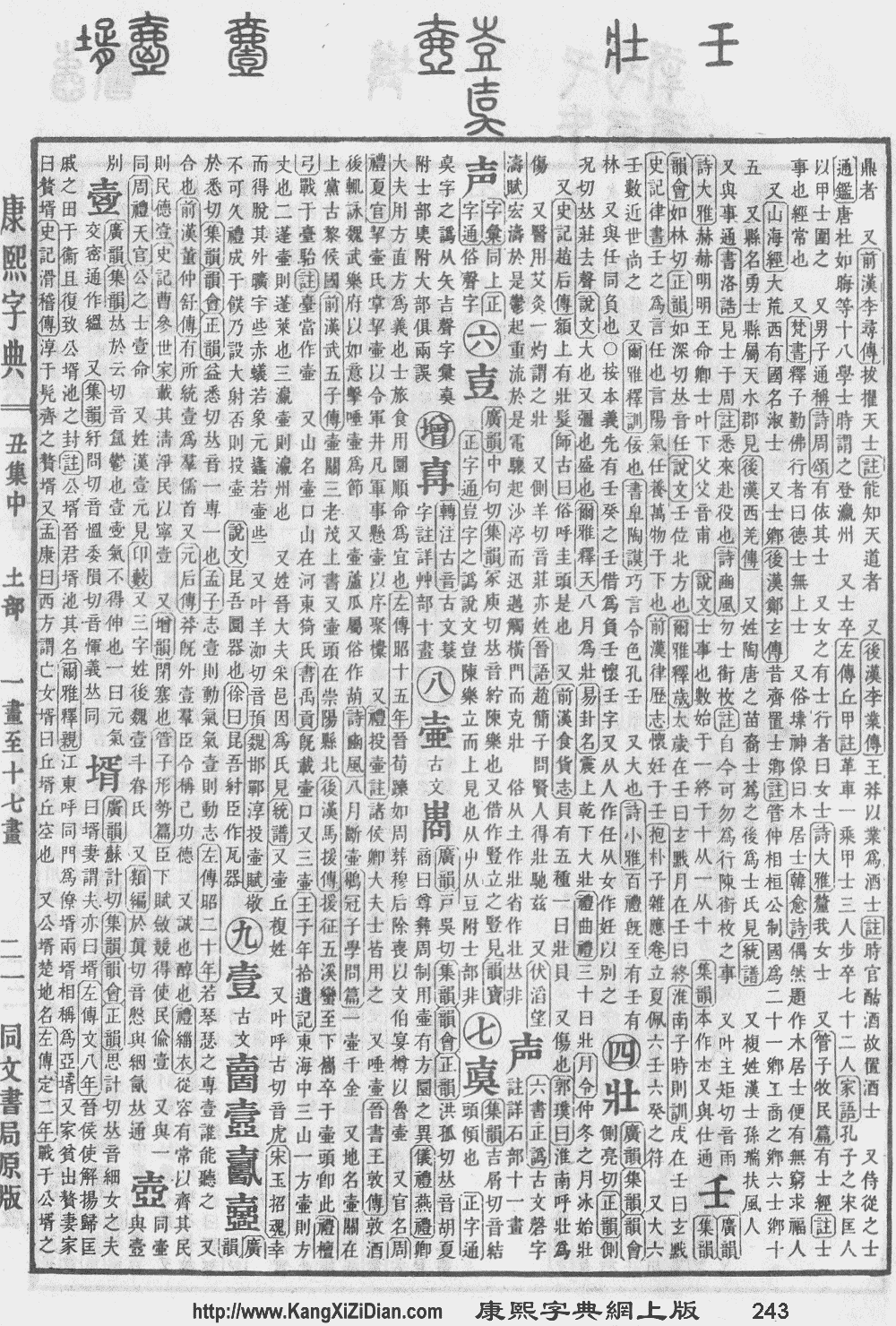
- Kangxi Dictionary: page 243, character 10
- Dai Kanwa Jiten: character 5661
- Dae Jaweon: page 483, character 19
- Hanyu Da Zidian (first edition): volume 1, page 467, character 10
- Unihan data for U+58F9
Chinese
Lua error in Module:utilities at line 142: attempt to perform arithmetic on local 'h' (a nil value)
Glyph origin
| Historical forms of the character 壹 | |
|---|---|
| Shuowen Jiezi (compiled in Han) | Liushutong (compiled in Ming) |
| Small seal script | Transcribed ancient scripts |
 |
 |
Characters in the same phonetic series (壹) (Zhengzhang, 2003)
Phono-semantic compound (形聲/形声, OC *qlid) : semantic 壺 + phonetic 吉 (OC *klid). (Shuowen)
Pronunciation
Definitions
壹
- (Classical Chinese) faithful; committed
- 以懲不壹。 [Classical Chinese, trad.]
- From: Commentary of Zuo, c. 4th century BCE
- Yǐ chéng bù yī. [Pinyin]
- To punish those not loyal.
以惩不壹。 [Classical Chinese, simp.]
- (financial) one, variant of 一
- 壹發五豝。 [Classical Chinese, trad.]
- From: The Classic of Poetry, c. 11th – 7th centuries BCE, translated based on James Legge's version
- Yī fā wǔ bā. [Pinyin]
- One shot, five sows.
壹发五豝。 [Classical Chinese, simp.]
Compounds
- 不壹
- 壹岐 (Yīqí)
- 壹鬱/壹郁
- 民心不壹
- 禮先壹飯/礼先壹饭
- 莫衷壹是
- 誠壹/诚壹
See also
| Chinese numbers | |||||||||||||||||
|---|---|---|---|---|---|---|---|---|---|---|---|---|---|---|---|---|---|
| 0 | 1 | 2 | 3 | 4 | 5 | 6 | 7 | 8 | 9 | 10 | 102 | 103 | 104 | 106 | 108 | 1012 | |
| Normal (小寫/小写) |
〇, 零, 空 | 一, 蜀 | 二, 兩/两 | 三 | 四 | 五 | 六 | 七 | 八 | 九 | 十 | 百 | 千 | 萬/万, 十千 (Malaysia, Singapore) |
百萬/百万, 桶(Philippines), 面桶 (Philippines) |
億/亿 | 兆 (Taiwan) 萬億/万亿 (Mainland China) |
| Financial (大寫/大写) |
零 | Lua error in Module:utilities at line 142: attempt to perform arithmetic on local 'h' (a nil value) | 貳/贰 | 參/叁 | 肆 | 伍 | 陸/陆 | 柒 | 捌 | 玖 | 拾 | 佰 | 仟 | ||||
References
- Dictionary of Chinese Character Variants (教育部異體字字典), A00834
- “壹”, in 漢語多功能字庫 (Multi-function Chinese Character Database), 香港中文大學 (the Chinese University of Hong Kong), 2014–
- “Entry #2”, in 臺灣閩南語常用詞辭典 [Dictionary of Frequently-Used Taiwan Minnan] (in Chinese and Min Nan), Ministry of Education, R.O.C., 2023.
Japanese
| 壱 | |
| Lua error in Module:utilities at line 142: attempt to perform arithmetic on local 'h' (a nil value) |
This article is issued from Wiktionary. The text is licensed under Creative Commons - Attribution - Sharealike. Additional terms may apply for the media files.