擗
| ||||||||
Translingual
Han character
擗 (Kangxi radical 64, 手+13, 16 strokes, cangjie input 手尸口十 (QSRJ), four-corner 50041, composition ⿰扌辟)
- to beat the breast
References
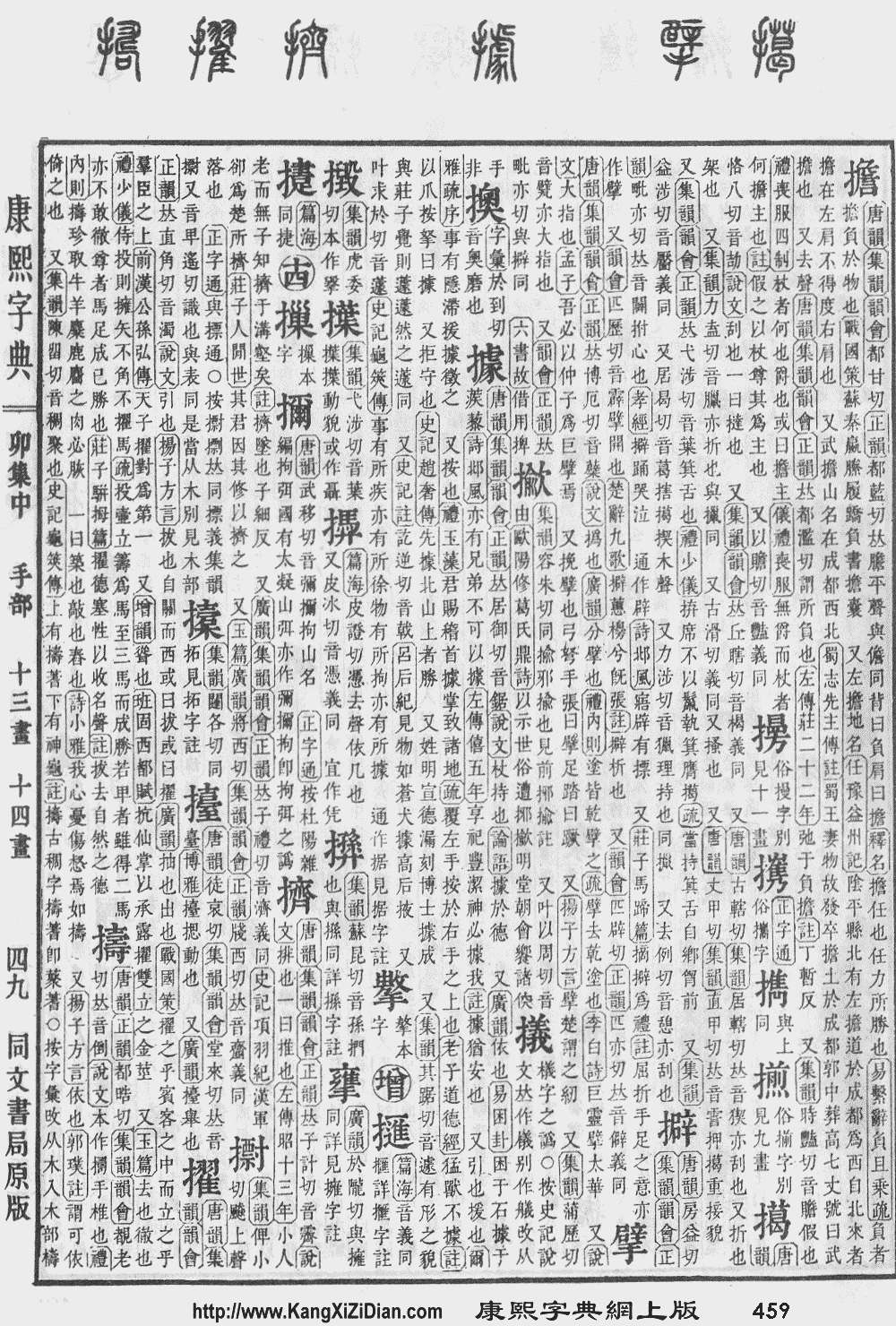
- Kangxi Dictionary: page 459, character 7
- Dai Kanwa Jiten: character 12834
- Dae Jaweon: page 808, character 6
- Hanyu Da Zidian (first edition): volume 3, page 1973, character 3
- Unihan data for U+64D7
Chinese
Glyph origin
Characters in the same phonetic series (辟) (Zhengzhang, 2003)
| Old Chinese | |
|---|---|
| 嬖 | *peːɡs |
| 薜 | *beːɡs, *preːɡ |
| 鐾 | *beːɡs |
| 臂 | *peɡs |
| 譬 | *pʰeɡs |
| 避 | *beɡs |
| 檗 | *preːɡ |
| 擘 | *preːɡ |
| 糪 | *preːɡ, *pʰreːɡ |
| 掰 | *preːɡ |
| 繴 | *breːɡ, *peːɡ |
| 辟 | *peɡ, *pʰeɡ, *beɡ |
| 璧 | *peɡ |
| 鐴 | *peɡ |
| 躄 | *peɡ |
| 襞 | *peɡ |
| 僻 | *pʰeɡ, *pʰeːɡ |
| 癖 | *pʰeɡ, *pʰeːɡ |
| 廦 | *pʰeɡ, *peːɡ |
| 擗 | *beɡ |
| 躃 | *beɡ |
| 闢 | *beɡ |
| 壁 | *peːɡ |
| 鼊 | *peːɡ |
| 霹 | *pʰeːɡ |
| 劈 | *pʰeːɡ |
| 澼 | *pʰeːɡ |
| 憵 | *pʰeːɡ |
| 甓 | *beːɡ |
| 鷿 | *beːɡ |
| 幦 | *mbeːɡ |
Etymology 1
Lua error in Module:utilities at line 142: attempt to perform arithmetic on local 'h' (a nil value)
Pronunciation
Definitions
擗
Etymology 2
Lua error in Module:utilities at line 142: attempt to perform arithmetic on local 'h' (a nil value)
Pronunciation
Definitions
擗
- (Cantonese, transitive) to discard; to throw away
- (Hokkien) to fling; to flick; to throw; to sling
- (Hokkien) to smack; to strike; to hit; to slap; to attack physically
- (Xiamen and Quanzhou Hokkien) to rebuke; to scold; to criticize harshly; to reprimand; to reproach; to attack verbally
- (Hokkien) to burst out; to gush out; to leak; to flow out everywhere
- (Taiwanese Hokkien) to slap; to dash; to slather; to coat; to splatter (lime, ash, mud, etc on something, such as a wall); to apply plaster
- (Hokkien) flutter; rustle; whoosh; boom (sound made by thin objects like cloth, paper, arrows, fire, being blown by or whistling through the wind)
Synonyms
Lua error in Module:utilities at line 142: attempt to perform arithmetic on local 'h' (a nil value)
Derived terms
- 擗出去
- 擗捒
- 擗走
Japanese
Korean
Hanja
擗 • (byeok) (hangeul 벽, revised byeok, McCune–Reischauer pyŏk, Yale pyekaa)
- to beat the breast
Vietnamese
Han character
擗: Hán Nôm readings: bịch, tịch, vích, phích, phịch
- This term needs a translation to English. Please help out and add a translation, then remove the text
{{rfdef}}.
References
This article is issued from Wiktionary. The text is licensed under Creative Commons - Attribution - Sharealike. Additional terms may apply for the media files.