kel
Cypriot Arabic
| Root |
|---|
| '-k-l |
| 4 terms |
References
- Borg, Alexander (2004) A Comparative Glossary of Cypriot Maronite Arabic (Arabic–English) (Handbook of Oriental Studies; I.70), Leiden and Boston: Brill, page 142
Czech
Pronunciation
- IPA(key): [ˈkɛl]
- Hyphenation: kel
- Rhymes: -ɛl
Etymology 1
Inherited from Old Czech kel, from Proto-Slavic *kъlъ.
Declension
Etymology 2
Related to older klí (“embryo, germ”).
Noun
kel m inan or f
Declension
Derived terms
Further reading
- kel in Příruční slovník jazyka českého, 1935–1957
- kel in Slovník spisovného jazyka českého, 1960–1971, 1989
- kel in Internetová jazyková příručka
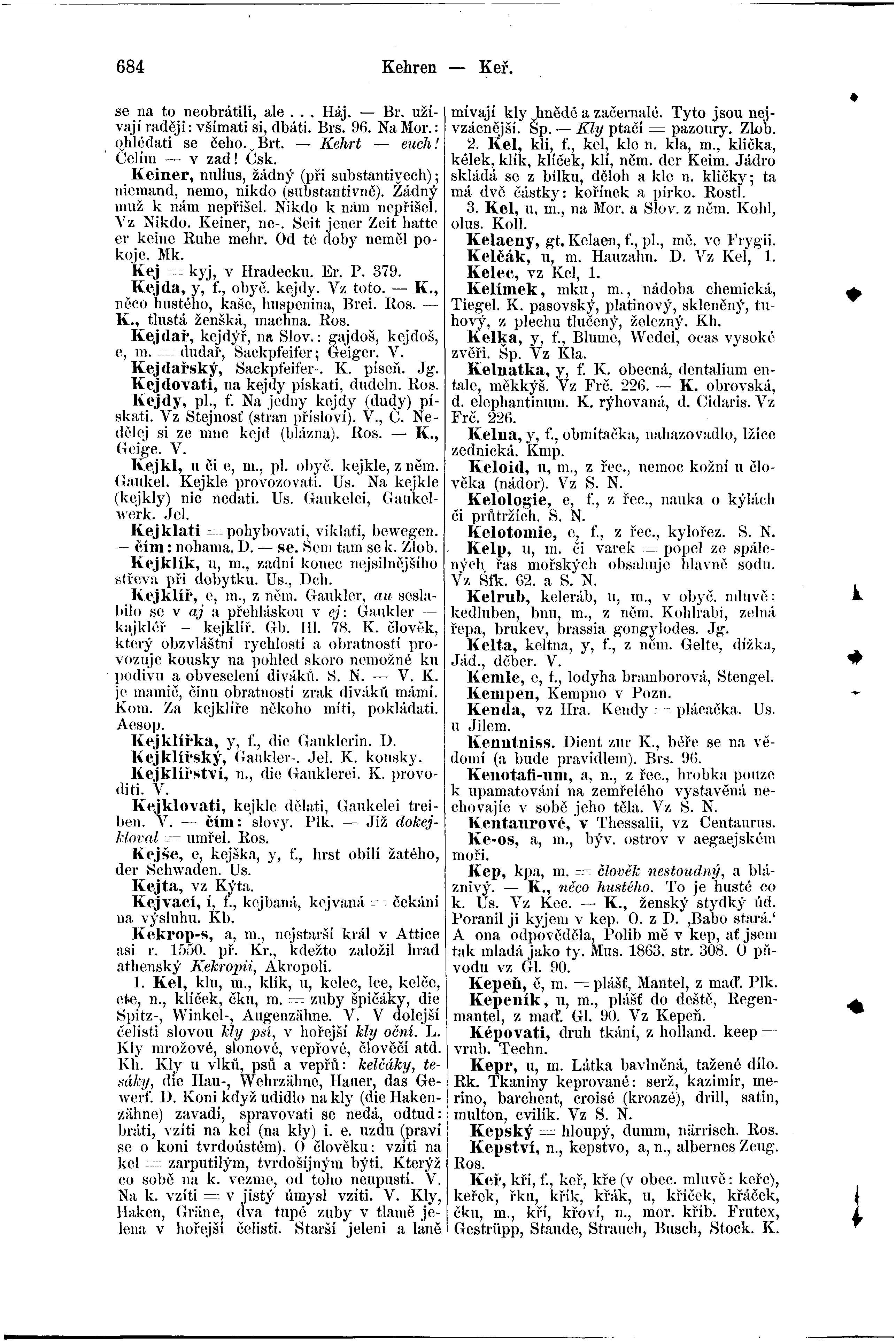
- František Št. Kott (1878), “kel”, in Česko-německý slovník zvláště grammaticko-fraseologický (in Czech), Prague: Josef Kolář, page 684
Danish
Pronunciation
- IPA(key): /keːl/, [kʰeːˀl]
Hungarian
Pronunciation
- IPA(key): [ˈkɛl]
Audio (file) - Hyphenation: kel
- Rhymes: -ɛl
Etymology 1
From Proto-Ugric *kälä-, possibly derived from Proto-Finno-Ugric *kälä- (“to ford”).[1] Akin to Mansi ква̄луӈкве (kwāluňkwe, “to rise”).
Verb
kel
- (obsolete) come and go, get about (to transport oneself from place to place)[2]
- (intransitive) to get up, rise (from sleep; occasionally more broadly from a lying or sitting position)
- (intransitive, of the sun or moon) to rise
- Synonym: felkel
- (intransitive, of a seedling) to sprout, shoot, bud, germinate
- Synonyms: sarjad, kibújik
- (intransitive, of a young bird or insect) to hatch (to be hatched)
- (intransitive, cooking, of dough) to rise
- (intransitive, figuratively, in expressions) to start, set off, take off
- (intransitive, figuratively, archaic or poetic) to rise, arise (chiefly of emotions, their outward expressions, or natural forces like wind)
- Synonyms: keletkezik, kezdődik, támad
- (intransitive, marketing, chiefly after adverbs) to be sought-after, in demand
- (intransitive, of a piece of writing) to be dated (only in the past tense)
Conjugation
| 1st person sg | 2nd person sg informal |
3rd person sg, 2nd p. sg formal |
1st person pl | 2nd person pl informal |
3rd person pl, 2nd p. pl formal | |||
|---|---|---|---|---|---|---|---|---|
| Indicative mood |
Present | Indef. | kelek | kelsz | kel | kelünk | keltek | kelnek |
| Def. | intransitive verb, definite forms are not used | |||||||
| 2nd-p. o. | ― | |||||||
| Past | Indef. | keltem | keltél | kelt | keltünk | keltetek | keltek | |
| Def. | ― | |||||||
| 2nd-p. o. | ― | |||||||
| Conditional mood |
Present | Indef. | kelnék | kelnél | kelne | kelnénk | kelnétek | kelnének |
| Def. | ― | |||||||
| 2nd-p. o. | ― | |||||||
| Subjunctive mood |
Present | Indef. | keljek | kelj or keljél |
keljen | keljünk | keljetek | keljenek |
| Def. | ― | |||||||
| 2nd-p. o. | ― | |||||||
| Infinitive | kelni | kelnem | kelned | kelnie | kelnünk | kelnetek | kelniük | |
| Other nonfinite verb forms |
Verbal noun | Present participle | Past participle | Future part. | Adverbial part. | Potential | ||
| kelés | kelő | kelt | ― | kelve | kelhet | |||
Derived terms
- kelendő
- keleszt
- keletkezik
- keletlen
- kelt
- költ
- jár-kel
(With verbal prefixes):
- birokra kel
- életre kel
- ki korán kel, aranyat lel
- lába kel
- szárnyra kel
- útra kel
- versenyre kel
- védelmére kel
Etymology 2
Borrowed from Bavarian Keel (“Savoy cabbage”), from Latin caulis (“stem, stalk, cabbage”).
Noun
kel (plural kelek)
- Savoy cabbage
- Synonym: kelkáposzta
- (in phrases and compounds) a type of Brassica (cabbage and similar plants), including kale, cauliflower, napa cabbage, and Brussels sprout
- Hyponyms: fodros kel, kínai kel
Declension
| Inflection (stem in -e-, front unrounded harmony) | ||
|---|---|---|
| singular | plural | |
| nominative | kel | kelek |
| accusative | kelt | keleket |
| dative | kelnek | keleknek |
| instrumental | kellel | kelekkel |
| causal-final | kelért | kelekért |
| translative | kellé | kelekké |
| terminative | kelig | kelekig |
| essive-formal | kelként | kelekként |
| essive-modal | — | — |
| inessive | kelben | kelekben |
| superessive | kelen | keleken |
| adessive | kelnél | keleknél |
| illative | kelbe | kelekbe |
| sublative | kelre | kelekre |
| allative | kelhez | kelekhez |
| elative | kelből | kelekből |
| delative | kelről | kelekről |
| ablative | keltől | kelektől |
| non-attributive possessive - singular |
kelé | keleké |
| non-attributive possessive - plural |
keléi | kelekéi |
| Possessive forms of kel | ||
|---|---|---|
| possessor | single possession | multiple possessions |
| 1st person sing. | kelem | keljeim |
| 2nd person sing. | keled | keljeid |
| 3rd person sing. | kelje | keljei |
| 1st person plural | kelünk | keljeink |
| 2nd person plural | keletek | keljeitek |
| 3rd person plural | keljük | keljeik |
References
- Entry #259 in Uralonet, online Uralic etymological database of the Hungarian Research Centre for Linguistics.
- kel in Zaicz, Gábor (ed.). Etimológiai szótár: Magyar szavak és toldalékok eredete (‘Dictionary of Etymology: The origin of Hungarian words and affixes’). Budapest: Tinta Könyvkiadó, 2006, →ISBN. (See also its 2nd edition.)
Further reading
- (to get up, to rise): kel in Bárczi, Géza and László Országh. A magyar nyelv értelmező szótára (‘The Explanatory Dictionary of the Hungarian Language’, abbr.: ÉrtSz.). Budapest: Akadémiai Kiadó, 1959–1962. Fifth ed., 1992: →ISBN
- (Savoy cabbage): kel in Bárczi, Géza and László Országh. A magyar nyelv értelmező szótára (‘The Explanatory Dictionary of the Hungarian Language’, abbr.: ÉrtSz.). Budapest: Akadémiai Kiadó, 1959–1962. Fifth ed., 1992: →ISBN
Old Czech
Alternative forms
- keł (alternative writing)
Etymology
Inherited from Proto-Slavic *kъlъ.
Declension
| singular | dual | plural | |
|---|---|---|---|
| nominative | kel | kly | kli, klové |
| genitive | kla, klu | klú | klóv |
| dative | klu | kloma | klóm |
| accusative | kel | kly | kly |
| vocative | kle | kly | kli, klové |
| locative | kle, klu | klú | kléch |
| instrumental | klem | kloma | kly |
See also Appendix:Old Czech nouns and Appendix:Old Czech pronunciation.
Descendants
- Czech: kel
Further reading
- Jan Gebauer (1903–1916), “kel”, in Slovník staročeský (in Czech), Prague: Česká grafická společnost "unie", Česká akademie císaře Františka Josefa pro vědy, slovesnost a umění
Slovak
Pronunciation
- IPA(key): /ˈkɛɫ/
Etymology 1
Borrowed from Bavarian Keel (“Savoy cabbage”), from Latin caulis (“stem, stalk, cabbage”).
Noun
kel m inan (genitive singular kelu, nominative plural kely, genitive plural kelov, declension pattern of dub)
Declension
Derived terms
- do kelu
- kelový
Etymology 2
Inherited from Proto-Slavic *kъlъ.
Noun
kel m inan (genitive singular kla, nominative plural kly, genitive plural klov, declension pattern of dub)
Declension
Derived terms
- klový
Further reading
- “kel”, in Slovníkový portál Jazykovedného ústavu Ľ. Štúra SAV [Dictionary portal of the Ľ. Štúr Institute of Linguistics, Slovak Academy of Science] (in Slovak), https://slovnik.juls.savba.sk, 2024
Sranan Tongo
Noun
kel
- guy, dude
- c. 1950, Sophie Redmond, “Datra Papa [A doctor's father]”, in Thea Doelwijt, editor, Kri, kra! Proza van Suriname [Kri, kra! Prose from Suriname], Paramaribo: Bureau Volkslectuur, published 1972, page 115:
- Nana: Misi libi mi nanga tori foe Frits p'pa; efi mi prakseri fa mi lasi na beste ten foe mi libi, nanga na kel.
- Nana: Madam, let me be with the whole story about Frits's dad. If I just think about how I waisted the best years of my life with that guy...
- 1985, Paul Marlee, Proefkonijn, Paramaribo: Uitgeverij De Volksboekwinkel, →ISBN, page 99:
- ‘Blub, hik, sorry man, ei Arnie, pe y' ben de yongu, m' e suk' i no moer man; pe a meid Sastro de man, mi lob' a sma, yongu, wan f' den kel go vandoor nang' a sma k'ba natuurlijk. (...)’
- 'Glub, hiccup, sorry, man, hey Arnie, where have you been, man, I've been looking all over for you; where's that girl Sastro, man, I love that girl, man, one of the guys already went off with her, obviously. (...)'
Descendants
- → Dutch: kill
Swedish
Etymology
Deverbal from kela
Declension
| Declension of kel | ||||
|---|---|---|---|---|
| Uncountable | ||||
| Indefinite | Definite | |||
| Nominative | kel | kelet | — | — |
| Genitive | kels | kelets | — | — |
References
Turkish
Etymology
From Ottoman Turkish كل (kel, “bald”), from Persian کل (kal, “bald”). Cognate to kelle (“head”) and ultimately to Latin calvus (“bald”), Old English calu (“bald”).
Pronunciation
- IPA(key): /ˈcæl/
Audio (file)
Declension
| Inflection | |||||||||||||||||||||||||||||||||||||||||||||||||||||||||||||||||||||||||||||||||||||||||||||||||||||||||||||||||||||||||||||||||||||||||||||||||||||
|---|---|---|---|---|---|---|---|---|---|---|---|---|---|---|---|---|---|---|---|---|---|---|---|---|---|---|---|---|---|---|---|---|---|---|---|---|---|---|---|---|---|---|---|---|---|---|---|---|---|---|---|---|---|---|---|---|---|---|---|---|---|---|---|---|---|---|---|---|---|---|---|---|---|---|---|---|---|---|---|---|---|---|---|---|---|---|---|---|---|---|---|---|---|---|---|---|---|---|---|---|---|---|---|---|---|---|---|---|---|---|---|---|---|---|---|---|---|---|---|---|---|---|---|---|---|---|---|---|---|---|---|---|---|---|---|---|---|---|---|---|---|---|---|---|---|---|---|---|---|
| Nominative | kel | ||||||||||||||||||||||||||||||||||||||||||||||||||||||||||||||||||||||||||||||||||||||||||||||||||||||||||||||||||||||||||||||||||||||||||||||||||||
| Definite accusative | keli | ||||||||||||||||||||||||||||||||||||||||||||||||||||||||||||||||||||||||||||||||||||||||||||||||||||||||||||||||||||||||||||||||||||||||||||||||||||
| Singular | Plural | ||||||||||||||||||||||||||||||||||||||||||||||||||||||||||||||||||||||||||||||||||||||||||||||||||||||||||||||||||||||||||||||||||||||||||||||||||||
| Nominative | kel | keller | |||||||||||||||||||||||||||||||||||||||||||||||||||||||||||||||||||||||||||||||||||||||||||||||||||||||||||||||||||||||||||||||||||||||||||||||||||
| Definite accusative | keli | kelleri | |||||||||||||||||||||||||||||||||||||||||||||||||||||||||||||||||||||||||||||||||||||||||||||||||||||||||||||||||||||||||||||||||||||||||||||||||||
| Dative | kele | kellere | |||||||||||||||||||||||||||||||||||||||||||||||||||||||||||||||||||||||||||||||||||||||||||||||||||||||||||||||||||||||||||||||||||||||||||||||||||
| Locative | kelde | kellerde | |||||||||||||||||||||||||||||||||||||||||||||||||||||||||||||||||||||||||||||||||||||||||||||||||||||||||||||||||||||||||||||||||||||||||||||||||||
| Ablative | kelden | kellerden | |||||||||||||||||||||||||||||||||||||||||||||||||||||||||||||||||||||||||||||||||||||||||||||||||||||||||||||||||||||||||||||||||||||||||||||||||||
| Genitive | kelin | kellerin | |||||||||||||||||||||||||||||||||||||||||||||||||||||||||||||||||||||||||||||||||||||||||||||||||||||||||||||||||||||||||||||||||||||||||||||||||||
| |||||||||||||||||||||||||||||||||||||||||||||||||||||||||||||||||||||||||||||||||||||||||||||||||||||||||||||||||||||||||||||||||||||||||||||||||||||
Synonyms
Descendants
- → Romanian: chel
Volapük
Wolof
Yetfa
References
- Cornelis L. Voorhoeve, Languages of Irian Jaya Checklist (1975, Canberra: Pacific Linguistics), page 122
Zou
Pronunciation
- IPA(key): /kel˧˩/
Etymology 2
From Proto-Kuki-Chin *kal, from Proto-Sino-Tibetan *g-la. Cognates include Khumi Chin ämäkei and Mizo kal.
Pronunciation
- IPA(key): /kəl˧/
Etymology 3
From Proto-Kuki-Chin *kaal.
Pronunciation
- IPA(key): /kəl˧/
Derived terms
References
- Lukram Himmat Singh (2013) A Descriptive Grammar of Zou, Canchipur: Manipur University, pages 40, 46, 81